

Those of us looking to make money from surveys have been talking about Pinecone Research for years, almost as if it were a legend. Everyone says it’s one of the best-paying sites. If it lets you in, that is.
It kept me out for about 4 years.
I’d sign up, get told I didn’t qualify, try again, and it was the same thing every time. Until I used a different email address and, surprise, I got accepted! Same person, different address (and no, I can’t tell you what the site saw in the new one that it didn’t see in the old one).
You tell me: after all that knocking on the door, what would you expect? I was expecting something really special.
But before we get there, we need to clear up something more important. Is this a site you can trust or a rip-off?
This is where I’d start with any survey site because, unfortunately, plenty of them are scams. And it’s a real shame to sit there answering survey after survey, thinking about the money, only to find out at the end that nobody’s going to pay you. All you’ve done is waste your time.
Here’s the answer, so I don’t keep you in suspense: it’s not a rip-off. Pinecone Research really does pay you for the surveys you complete.
But is it worth your time too?
This is where I can no longer give you a simple yes. It took me about 4 years to get a look inside. All you need is this review: I’ll show you how it works and what I found once I got in, and by the end you’ll be able to decide whether it’s for you or not.
What is PineCone Research and how does it work?
In short, Pinecone Research is a paid survey site. They call it an “online market research panel,” which is a pretty fancy name for something simple: you fill out questionnaires online and say what you think about upcoming consumer products.
And we’re not talking about a new site here: it started in 1998.
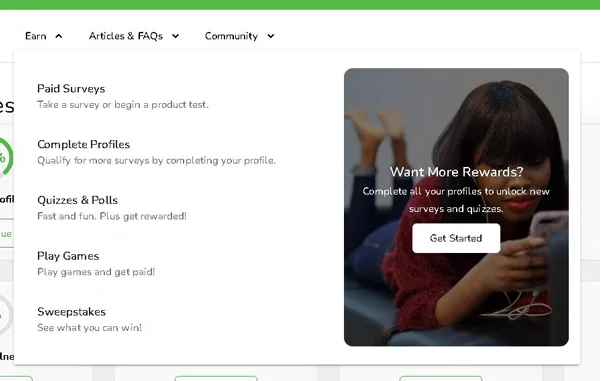
At least according to their site, you can earn rewards in 4 ways:
- surveys
- quizzes
- product tests (I’ll admit, these are the ones I’d sign up for first)
- focus groups, meaning group discussions
Sounds nice, doesn’t it? But a list won’t convince me, so I also wanted to know who owns the site.
It belongs to Nielsen Consumer LLC, a US-registered company in the NIQ group, with its official mailing address in Chicago, Illinois. The company runs the panel together with ROI Rocket.
The founders?
I couldn’t find anything on them. Their legal pages don’t give a single name, and neither does their About page. I would have liked to see at least one, but for those of us making money from surveys, what matters most is who’s responsible for the site now, and we know who that is.
So is it a scam? No. There’s a huge, legitimate, multibillion-dollar corporation behind it. Can you really see it stealing your card number? I can’t.
But a site can be perfectly honest and still eat up your time for not much money (the company name really doesn’t help me here). The only way to find out how much you can get out of it and how much time it takes is to understand how it works, so here’s how you make money on Pinecone Research.
Give opinion and earn money
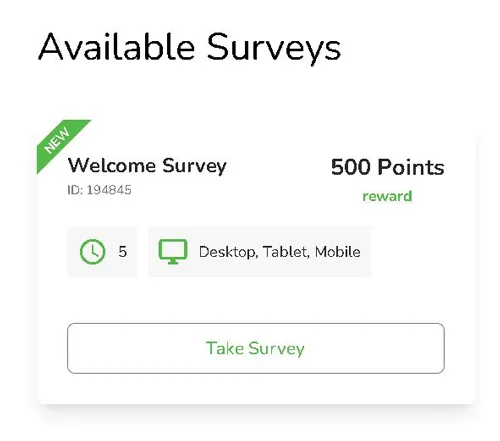
You’ll find the surveys waiting right on your account’s home page, each one on its own card. I had the Welcome Survey (ID: 199848) there, and the card told me everything I wanted to know: what it’s called, about how long it would take me, whether it works on Desktop, Tablet, or Mobile, and the exact number of points I’d get. I wish it worked like this everywhere, so you’d know what you’re spending your time on. Your account may show different surveys, maybe even more than mine did.
Or you may run into the card that was right next to it in my account: “No surveys available. Complete more profiles to receive more surveys.”
In other words, you have no surveys right now and you’re being asked to fill out more profiles. You’ll see this screen more often than any other on the site, so don’t panic when it shows up.
And when surveys do appear, where do they come from?
The ones I’d want are the in-house surveys, run directly by Nielsen/NIQ. They’re tightly targeted, they usually lead to a product test, and once you get one, it rarely kicks you out. But Pinecone Research has shifted toward partner surveys. So you end up on “survey routers” (sites that collect surveys from several companies and send you to them), and Pinecone is left as just a middleman between you and forms from outside company networks.
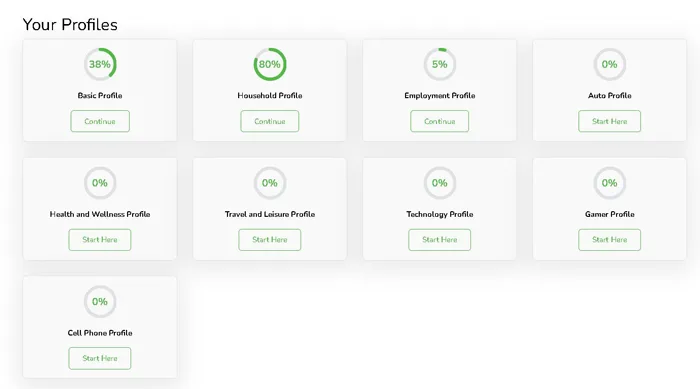
Before you get anything that’s right for you, you have to qualify by completing separate questionnaires:
- Basic Profile
- Household Profile
- Employment Profile
- Auto Profile
- Health and Wellness Profile
- Travel and Leisure Profile
- Technology Profile
- Gamer Profile
- Cell Phone Profile (separate from Technology, just to be clear)
That’s 9 profiles, most of them unpaid, like mini-surveys you take for free. Fine, you’ll say, at least after that the questions are over.
They’re not!
Even with your profile 100% complete, partner surveys still start with a few short questions, to see if you’re who they’re looking for. To me, that’s a bit much for someone who has already answered so many. I’d still fill out the profiles, because without them you won’t get surveys that are right for you. But I’d do them knowing nobody is paying you for that time.
We can’t count on the number of surveys either, because there’s no guaranteed daily minimum. Where you live matters too. The list of countries started out as strictly the US, the UK, and Canada, and now France, Germany, and Italy are on it too. But English-speaking countries still get the most surveys, and English is also the main survey language (French, German, and Italian show up depending on the country where you registered your account).
Now for the money. The first card treats you well: the Welcome Survey pays exactly 500 points ($5), as you can see in the image above. After that, things change, because a regular survey now pays a lot less than the fixed amount it used to, down to $0.75-$1 ($1 is 100 points). To earn that same $5 again, you need 5 surveys at $1 or almost 7 at $0.75, and only the ones where you get past the opening questions count.
That’s not a lot of money.
There are bigger payouts too, up to 750-1,250 points ($7.50-$12.50), but those are strictly for at-home product tests. You rarely get them, they run for several days, and they ask you to upload photos showing you used the product. A 1,250-point test is worth about 13 surveys at 100 points each, but I wouldn’t plan around one.
So you have something to compare it to, I’ve also written objective reviews of Golden Surveys, KingOpinion, ReferVoice, and Screenwise Panel. I’m not claiming they pay more than Pinecone Research, just that you can read them before you decide where to spend your time.
Quizzes and polls
Those of us who collect points on sites like these see the word “quiz” and immediately picture a little more going into our accounts. That’s not how it works at Pinecone Research. The quizzes and polls here don’t pay money or points, just sweepstakes entries.
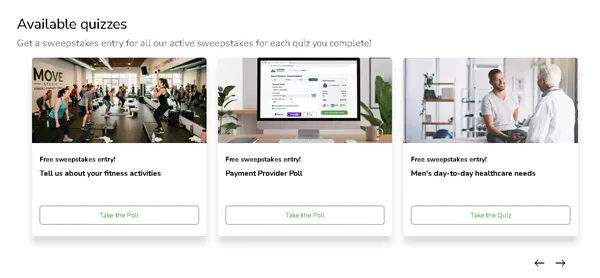
At least they don’t mislead you about it. On the main page of your account, there’s a carousel (a row you scroll through) called “Available quizzes,” and their rule is right under the title: “Get a sweepstakes entry for all our active sweepstakes for each quiz you complete!” In plain terms, you finish a quiz and get an entry into every active sweepstakes.
There’s very little to it. You open one and check boxes to answer a few simple questions about what you do day to day or which brands you like.
I have three right now: “Tell us about your fitness activities,” “Payment Provider Poll,” and “Men’s day-to-day healthcare needs.” The topics keep changing, depending on what their client companies want to know, so you may see different ones.
Now for the part I really liked. You know those surveys that kick you out halfway through because you’re not who they’re looking for? That doesn’t happen here. If the quiz is on your screen, you can take it.
They go even further. Does the topic have nothing to do with you? You still get in. The one about men’s health (where I wouldn’t have much to say) has an answer option that reads, word for word: “None of the above / Here for the Sweepstakes Entry.” It made me laugh! And it’s really useful, because you make it to the end and get your entry no matter what.
How many will you find in a day? There’s no minimum or maximum. They show up at random, so you can’t plan around them.
They’re shown to people in Pinecone’s usual countries, mainly the US, the UK, and Canada, and recently France, Germany, and Italy as well.
The reward fits in one sentence: 1 sweepstakes entry, which is the minimum, the usual amount, and the maximum.
The money? $0.00. You can finish every one that shows up and your balance won’t move, and you won’t get a single point closer to the $10 minimum for cashing out. What you get instead is a chance at the daily sweepstakes with a $100 prize pool, the weekly ones with $250, and the long-term ones with vehicles as prizes.
This is where I stop laughing. Pinecone Research used to send only product studies, which were guaranteed to pay out in points. Now it quickly learns how you exercise, which bank you use, and what you buy for your health, without paying you anything.
They’re guaranteed your answers. You get a chance.
I wouldn’t count them as a way to make money at all. I’d only do them for the sweepstakes, knowing I’m paying for the entry with information about myself.
Sweepstakes
The raffle section is where you see your tickets. You get them as you go: one digital ticket for every mini quiz, unpaid profile, or client survey you finish.
The screen has three big blocks. Each one shows how many tickets you’ve collected and a timer counting down to the second the drawing closes (with those seconds ticking away, it’s hard not to look).
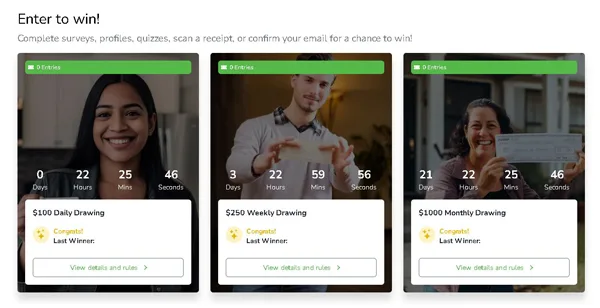
My account has exactly three cash raffles: “$100 Daily Drawing”, “$250 Weekly Drawing”, and “$1000 Monthly Drawing”.
You don’t have to wait for them to show up, because all three are always active. When one ends, the next starts on its own: the daily after 24 hours, the weekly after 7 days, and the monthly after 30 days, and the cycle keeps repeating.
The nice part is that nobody screens you. Your profile and demographics won’t keep you out of any raffle, and the rule fits in three words: Ticket? You’re in.
You don’t have to do any math on the prizes either. It’s a lottery run by the company, with fixed amounts and no sliding scale. You win at least $100 (in the daily raffle), usually $250 (in the weekly one), and at most $1,000.
I admit it sounds good. Those of us who collect points from surveys know how easily a large sum can draw you in, especially with a timer next to it.
I’d still close this screen and not look at it again.
Even when everything works the way it should, a raffle on a survey site is a bad deal: you give time and personal data, and they give you microscopic odds. At Pinecone Research, you can’t even count on that. The ticket counters are broken right now and don’t track what real people earn, so I wouldn’t trust the number in the blocks either. You answer surveys, Nielsen gets free market research, and you have no guarantee that your ticket made it into the drawing.
That’s working for nothing!
So leave the raffles alone and put all your energy into the survey cards that pay real points. Those points cash out for real gift cards, with no drawing to wait for.
How do you get paid?
I’ll tell you this up front so there are no surprises: Pinecone points don’t turn into cash, they turn into gift cards.
You click “Redeem Rewards” and from there you’re done with Pinecone Research, because everything moves over to Tremendous, an outside company that sends out rewards for other businesses.
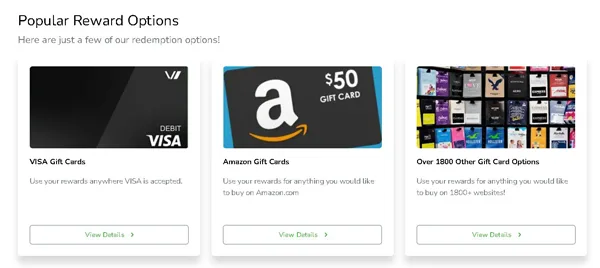
What are your options? A Visa gift card (virtual or plastic), an Amazon card, or one of more than 1,800 digital cards from Walmart, Apple, Starbucks and others. That number looks good, but I wouldn’t read too much into it. The catalog depends on where you live: Amazon and Visa are available in the US, the UK, Canada, France, Germany and Italy, and store cards are limited to their local markets.
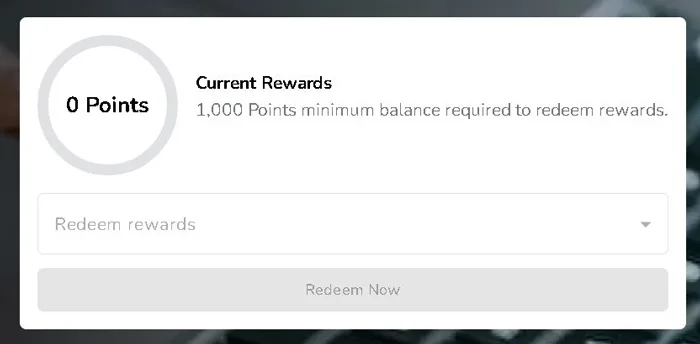
Now, the math. One point is worth 1 cent, and you need at least 1,000 points, or $10, to redeem anything.
With 999 points, you can’t redeem even a single cent.
I have to admit, they’re fair about fees. Pinecone Research doesn’t charge you anything to redeem your points, no fee, no subscription, and Tremendous doesn’t charge anything for the digital options. The only thing you pay for is the plastic Visa card mailed to you, because the provider’s terms say the delivery fee comes right out of the card’s balance. And how much of a $10 card would that leave? I don’t have a number for that fee, but I’d get the code by email without thinking twice.
What really upset me was something else. Pinecone Research used to send your money straight to your bank account or PayPal, and you could cash out at $1. One dollar! Now you log in and PayPal and bank transfers are gone, and the minimum is 10 times higher. Those of us who collect points on sites like this usually want money we can spend however we like, and a gift card doesn’t end up in a bank account.
Still, I wouldn’t walk away from my points over this. Do you already have points saved up in your account? I’d do a few more surveys, just enough to get past 1,000, and at least get the $10, as an Amazon card, for example.
And if PayPal matters to you, I’ve also written honest reviews of other survey sites: Userfeel, Survimo, GreenPanthera and Benable. Put them side by side with Pinecone or whatever sites you use now, since it doesn’t hurt to look through them.
How much does Pinecone Research pay?
I’d like to give you a number, X dollars an hour, and wrap this up fast. I can’t, because what you earn at Pinecone Research doesn’t depend on the clock but on how closely you match the people companies are looking for. Early on, the only sure thing is the $5 (500 points) from the Welcome Survey, which is already waiting in your account.
After that, nobody promises you anything.
If you’re asking which method I’d pick, it’s product testing. It pays the most per card: $7.50 or more, while a survey that comes through another company can reach $0.50. At those rates, one test is worth 15 surveys (yes, I did the math). The good news comes with a condition, though: the amount stays “pending” until the company that requested the test can see from the tracking data that you completed it and approves the data. Until then, it isn’t your money.
As for surveys, I really am sorry about what happened to them.
Back in the day, Pinecone was famous for something simple: 300 points ($3) for any survey, however long, and nobody messed with that number. You’d answer 5-10 invitations and make $15-$30 a month without killing yourself. That model is gone. Now the payout changes from survey to survey, and a regular one can pay just 30 points ($0.30). To earn the $3 you used to get, you need 10 surveys. Ten instead of one! You know what that means for those of us collecting points? Several times the work for the same money.
Now look at the path to your first withdrawal.
You start with 500 points and feel like you’re already well on your way. Far from it: you’re still $5 away from being able to take anything out. Three partner surveys show up in your account, worth 50 points ($0.50) each. You get past the opening questions on all three and earn 150 points ($1.50). Nice, that’s 650. Can you withdraw? No.
You’re 350 points short of 1,000. By my count, that’s 7 surveys at 50 points or about 12 at 30, and they show up when they show up, so you’re waiting days or weeks. And on each one, there’s a high risk you’ll get kicked out during the very first questions.
That’s about what you get here: a quick $5, then $0.30 to $1 surveys, hard-won, one at a time.
I wouldn’t count on Pinecone for pocket money. It’s not a scam, and I want to be clear about that, but it pays too little and too slowly to be worth visiting the site every day. Our time is better spent on sites where earnings don’t get cut off by so many disqualifications and where tasks don’t pay only in raffle entries. Take the welcome bonus if you want, but don’t let your weekend plans depend on Pinecone.
How do you ask for help?
All of Pinecone Research’s support fits into a single form.
You get to it through the “Contact” link in the “Community” menu in the top bar. It asks for your name, email, phone number, a subject, and a written message, plus the project code (project ID) if you have a broken survey.
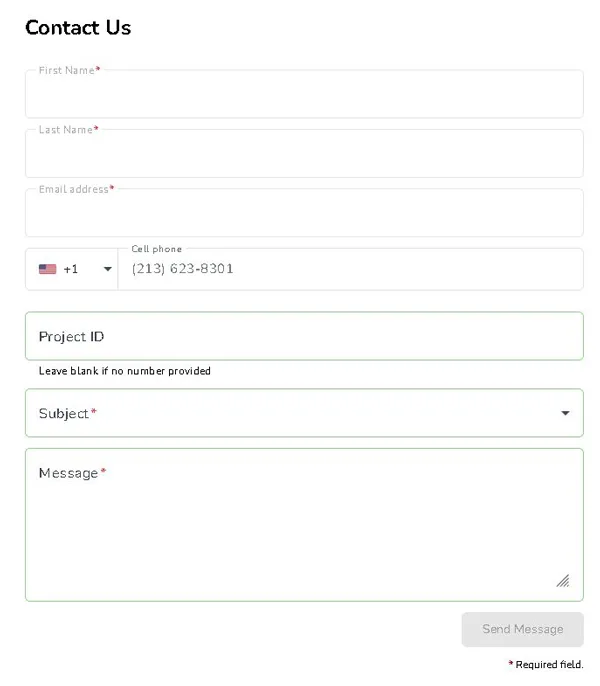
I looked for another option and didn’t find one. They have no live chat, no support phone number, and no shortcut to help in the mobile app. They want your number but won’t give you theirs, and I really don’t like how that looks.
So we’re all left with the form.
Can you look for the answer without their help? In theory, yes, because the top bar also has an “Articles & FAQs” menu with two sections. “Helpful Articles” promises help (it’s right there in the name), but what you find are general blog posts: “Why Honest Answers are Crucial in Survey Work,” about being honest in surveys, or “Ways to Unwind After Work,” about how to relax after work. Your survey freezes and you get relaxation tips. What can I say? Maybe you’ll really need them after that.
It’s filler content, with no technical help at all.
The “FAQs” section at least does what it can: 15 common questions with fixed answers that you open one at a time. They stick to the basic rules:
- how your data gets to companies
- the basic steps for claiming your rewards
- the household rules and how to update your profile
- what to do when a technical problem comes up (I’d start with “What do I do if the survey won’t allow me to advance?” which covers what to do when the survey won’t let you continue)
They’re a good place to start, but an answer written for everyone won’t get your points back from a broken survey.
And it wasn’t always like this. Pinecone used to have a support team that replied very quickly. Did a survey break on the last screen? You’d email them directly, and within a day or two, a real person would manually add the missing 300 points to your account. That’s what I call support!
Now they’ve taken the direct email addresses off the site, and everything you write goes through that new form. A wall has gone up between us and the people who keep the site running.
But what scares me most is what the contact page doesn’t say: how long they take to reply. They don’t give any official estimate, and they don’t guarantee anything. How can you trust a support team that won’t even say that much? To me, that’s a big red flag.
You set aside time for a well-paying product test or a survey, and it freezes on the very last page. You fill out the form, and what do you get? Most likely an automated reply from a bot.
I don’t count on their support to protect my time, and I wouldn’t tell you to either. When something breaks, those points are probably gone for good, unfortunately.
PineCone Research rating on Trustpilot
Put the ratings side by side and you’d think they were for two different sites: 1.3 out of 5 on Trustpilot, based on 359 reviews, and 9 out of 10 on SurveyPolice, based on 722.
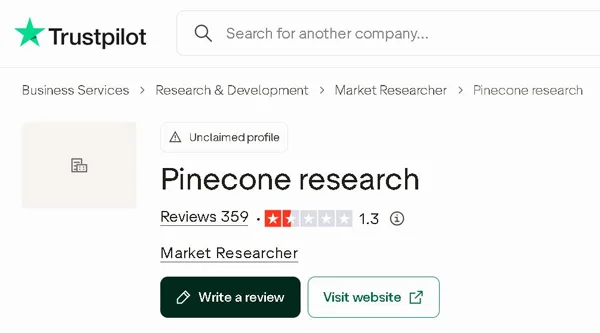
Which one is right? Both, but they’re describing different periods.
That 9 is a historical average, and recent SurveyPolice reviews score much lower. On Trustpilot, 114 of the reviews are from the last 12 months, and about 80% of those are negative (I did the math: around 90). Long-time members say the site used to be excellent and that you could count on it, and almost all the praise in the reviews comes from that time. Then a big update rolled out between late 2025 and early 2026, and that’s about when the tone changed too. People are mostly frustrated with the new site and the filters that decide who qualifies for a survey.
The filters would top my list.
You spend 20-25 minutes on a survey, get to the end, and only then find out you don’t qualify. That complaint comes up again and again, and I get it. Those of us who collect points know rejections are part of the game, but we want them in the first few questions, not on the last one.
The money isn’t making anyone happy anymore either. The site used to pay a flat $3 per survey. On a 25-minute survey, that worked out to about 12 cents a minute. Not much, but at least you knew what you were getting. Now people say the pay for longer studies has dropped drastically and the withdrawal rules have gotten stricter.
And what do you do when points go missing or a payment comes through wrong? You message support and, from what people say, you end up dealing with bots that don’t solve the problem. You sat there answering questions to earn those points, and the one replying on the other end is a bot!
Getting to a survey isn’t any smoother either: broken links, surveys that show as open but turn out to be closed when you click on them. The worst part, to me, is that some people can’t even log in to their accounts anymore to close them. You can’t even leave?
Trustpilot’s analysis of recent reviews again points to three things: the new format, wasted time, and unresponsive support. These are their complaints, not things that happened to me, but they come up too often for me to brush off.
So if that 9 out of 10 is tempting you, read the recent reviews first. And check the withdrawal rules before you earn your first point, not when you’re ready to cash out.
Red flags you should never ignore
The worst thing that can happen to your points is that they disappear before they turn into money. And that’s exactly what people write about Pinecone Research: points were taken out of their accounts before they hit the payout threshold. Those of us who collect points know how hard they are to build up, so even reading about it annoys me.
But at least you got those points.
With long surveys, you don’t even get that. This is a verified pattern, not some offhand comment on the internet: you answer all the way to the last question, then find out at the end that you don’t qualify. What do you get for all that time? Nothing. They keep your answers, which means they get your data for free.
So at that point you feel like leaving, right? Except leaving can come with another verified risk: you request a password reset, get an error, go back to the login page, and keep going in circles, with no reply from support. How do you close an account you can’t get into? You run into the same thing with a billing dispute.
What happens to your data is less clear. Pinecone Research is owned by NielsenIQ, one of the world’s major data brokers (a company that trades in data). To be fair, they have published a privacy notice. On Trustpilot, though, some people claim their data ends up being sold to other companies. I have no way to verify that, but it sounds believable to me, so I’d only give answers I wouldn’t mind other people knowing.
The last risk is the one I take most seriously, even though it doesn’t come from them. SurveyPolice writes about people targeted by a fake bank check scam run by someone posing as Pinecone Research. The nerve it takes to trick people earning money from surveys, of all people!
If you get a check in their name, I personally wouldn’t take it to the bank.
Who can use PineCone Research?
You no longer need an invitation to join PineCone Research. You just need to live in a country they accept. That’s the first requirement, so that’s where you start.
And that’s big news. For over 20 years, they kept all of us out: you couldn’t sign up from the site, so you had to go looking for links hidden on other blogs or in banners. Now they’ve put a “Join Now” button at the top of the site, and the hunt is over.
But “Join Now” doesn’t mean you’re in. It means you’re allowed to try.
The form has two parts: first they want to know who you are, then how you live. To set up your account, you give them your email, a unique password, and your full name (first name, middle name, last name). Nothing weird so far. Then they ask for your gender, exact date of birth, ethnicity, Hispanic origin, mobile number, and exact home address, including street, city, state, and ZIP code.
Next is a long questionnaire that tells them whether your household fits what companies are currently looking for in their studies. Here’s what they want to know:
- your education level, on a scale from “Less Than High School” to “Doctorate / PhD”
- which languages you actively speak (you check all that apply)
- whether you own your home or rent, and what pets you have (dogs, cats, even reptiles are on the list)
- how much of the household shopping you handle: groceries, alcoholic drinks, health and beauty products
- exactly how many people live in your home, including babies, but not students away at college
- how many children aged 18 or younger live with you
- your marital status: Single, Married, Divorced, Widowed, or Domestic Partnership
- your total annual household income, before taxes, on a scale that starts at “Under $10,000”
- your employment status: full-time, part-time, student, or unemployed
That’s about as much as a census asks, to be honest.
Then you get to your account’s main page, where you run into the question that can end it all: where do you or someone in your family work? The list includes advertising, PR, promotions and direct mail, marketing and market research, the media (radio, television, newspapers), and various retailers and manufacturers of food, drinks, groceries, alcohol, pet products, or health products. Check any of these and your profile is immediately marked ineligible, which means you’re done there.
I agree with them on this one. Anyone who works in marketing, advertising, or manufacturing, or has a close relative who does, could spy for their company or skew the results. The rest of us pick “None of the above” and move on.
Now for the trap, and I mean that literally.
PineCone Research slips in some questions designed to catch people who check boxes in a hurry, as well as bots (programs that fill out forms on their own). In my account, the four options were Green Dog, Purple Lion, Blue Lion, and Yellow Horse. It clearly said “Response should be Green Dog,” so I picked Green Dog and didn’t overthink it.
It sounds like a joke, right? One rushed click on Purple Lion or Blue Lion, and your profile can be quietly flagged or banned before you finish signing up. You’ve given them your address, your income, everything, and nobody tells you a thing!
So read every question all the way through, even the ones that seem silly.
There’s also a short required essay: “Please tell us where your favorite vacation spot is and why. Please be as detailed as possible.” In short, where you most like to go on vacation and why, in as much detail as possible.
They don’t care about your vacation. They want to see a person writing sentences that make sense in English, not a bot pasting in nonsense. If you write a single word or “beach cool,” you can be rejected on the spot by someone checking the answers or by one of their programs. Our English doesn’t need to be poetry here, but we do need a few sentences that fit together.
The confirmation screen reminds you that, if you’ve just signed up, your first $5 is waiting in the “Complete Welcome Survey” card, which is a 5-minute survey.
What would I do? I’d fill out the form carefully and not stress about it. Pinecone asks for a ton (who lives in your home, how much you all make, who you’re with, plus the vacation essay) just to let you use the site.
But needing an invitation isn’t an obstacle anymore, so it doesn’t hurt to create a profile. The math is simple: about 10 minutes for the form, 5 for the survey, so around 15 minutes for $5. As a starting point, that works for me. I say sign up, and watch out for the traps.
Can you use it on your phone?
Yes, there’s an official app, and it works on both Android and iPhone. On iPhone you get it from the App Store, and on Android you look for it on Google Play, where it’s listed under the company name Oceanside Ten (not a name you’d guess, I know).
And now for the part I don’t like.
It’s rated 2.0 out of 5, based on exactly 149 ratings. Would you eat at a restaurant rated 2 out of 5? I wouldn’t. True, there aren’t thousands of reviews, but they come from people who actually used the app, and that number tells me enough.
So don’t put this app on your phone!
Why spend your mobile data and storage space on something that will most likely be more frustrating than useful? You can end up with a frozen screen right in the middle of a task. And those of us earning small amounts on sites like this don’t really have time to waste like that.
Still tempted by the $5 welcome bonus? I get it, money is money. In that case, open Pinecone in a regular browser on a laptop or desktop, and stick with that.
The app can wait until they’ve fixed the bugs.
Is PineCone Research legit and real?
Yes, the money is real. They’ve paid me many times, and Pinecone Research is backed by NielsenIQ, one of the largest market research firms, so we’re not talking about a scam.
But it hasn’t been the same since the big site update, and unfortunately not in a good way.
You used to get a guaranteed $3 per survey. Now there’s no guarantee at all, it’s very hard to qualify, and you only get paid in gift cards or prepaid Visa cards. And when you do manage to qualify? You run into broken links, or you dutifully answer the questions and only find out near the end that you’re not a fit for the survey after all.
We put in our time, and they leave us with nothing! You can’t even ask anyone what happened, because support is automated and doesn’t really respond.
So you can’t count on Pinecone for steady income.
What’s left is the big company behind it and its reputation for testing physical products. That’s the only reason I’d stay, and even then I’d think twice. It works for people who’ll put up with the errors and the time-wasting surveys to get a product to test every now and then.
I’d only keep it as one extra site alongside others. As your only site, no.
Have you tried it? Leave a comment and tell me what happened, what you think, or what you’d like to ask me. I really am curious how it went for you.