

This review shows you what Benable offers and how it works, so you’ll know what to expect before you sign up.
Maybe you’ve already come across Benable online and thought to yourself that you could make money just by recommending things you like. That’s what the platform promises. And it’s not hard to see why it’s tempting. I think it’s exactly the kind of idea you’d want to be true.
If you’ve been reading my blog for a while, you know that I test platforms and tools and then share my findings. But when it comes to online money-making platforms, the reality is often more complicated than the sales presentation (and in some cases, much more complicated). What’s written on the homepage isn’t enough. Nor is what they say about the platform enough. So I signed up for Benable to see for myself what it offers, because otherwise I wouldn’t be able to tell you anything for sure.
Is it worth your time and effort?
That’s for you to decide after you’ve read everything. I’ll tell you what I saw.
Let’s get started.
What is Benable and how does it work?
Over 40,000 brands are automatically linked to your account the moment you sign up for Benable, and the app is free.
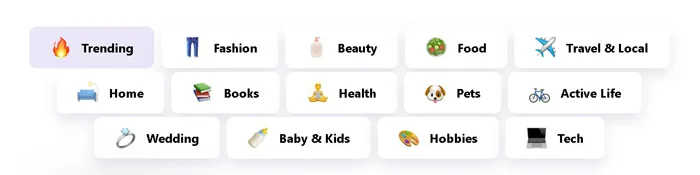
You create lists of things you genuinely recommend (books, products, tools, places, really anything), and when someone buys through your list, the brand pays you a commission. And that’s the whole basic mechanism.
Do you have to apply to each affiliate program individually? Do you need a minimum number of followers? Do you have to dance on TikTok?
None of that.
I’ve added products both ways, once with the link pasted in and once just with the name written out, and every time Benable automatically pulled up the image, price, link to the store, and everything else, then compiled them into a small, cute card. You spend about ten minutes adding things you already like, and your list looks, I don’t think I’m exaggerating, like a carefully arranged shelf in a beautiful store.
That’s it.
But is it legit? It is, because you can actually earn money from your recommendations (you can, not that you’re guaranteed to). However, that doesn’t automatically mean Benable is right for you. To find out, you need to understand how it works.
And you can only see that by looking at its earning options, because that’s where you’ll learn how you could make money from it and just how good it really is.
Affiliate marketing
The folks at Benable say they don’t take any of your commission and that you receive the full amount. I don’t believe that. (You’ll see why below.)
And, just to be clear from the start, referral lists don’t guarantee any earnings.
Technically speaking, when you create a list on Benable, you’re doing affiliate marketing, which means you’re promoting products or services online to make money, which is simple (in theory). Can it work? Maybe, and I know that because I have years of experience in affiliate marketing and make my living online from it. But I’ve also seen how much time and effort it takes to build something stable that can replace a full-time income. So, when a method makes affiliate marketing seem like child’s play, I’m skeptical.
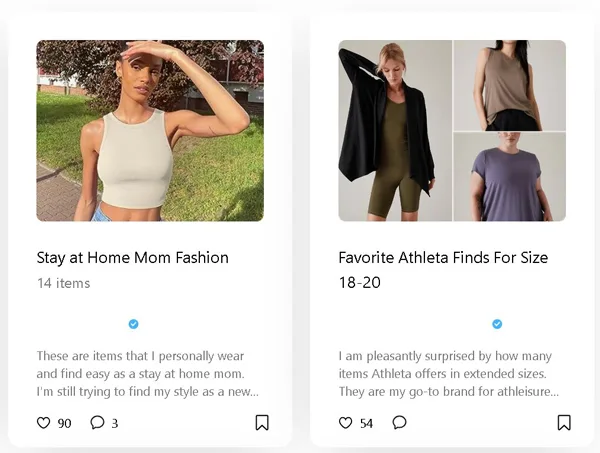
What exactly do you do on Benable? You generate affiliate links for the products you recommend, but you organize them into a list. You don’t need any technical skills, and it’s quick, so for someone just starting out, it’s an easier path into affiliate marketing.
And the list isn’t limited to products from stores. You can recommend restaurants, travel destinations, services, books, experiences, and much more, pretty much anything you want. However, to earn money from them, the items you add to the list must come from Benable’s partner stores.
By creating lists, you’re essentially joining the affiliate programs that Benable partners with, and you’re approved for all of them right away. This is a big deal, because with some programs, if you’re just starting out, it’s not easy to get in otherwise.
There’s also a downside, which we’ll get to right away.
A list that brings in money is created in four steps, in a fixed order:
- Partner brands, before anything else. Benable generates affiliate links only for their products, so you can use them to see what kind of list is worth creating. I looked through them before getting started, so I wouldn’t be wasting my time.
- The list, which appears in the Benable feed once you’re done.
- The recommendations, written in as much detail as possible. You can earn money from them, and the more details you include, the easier it is for the site to feature it in the trending section, where other members can see it.
- Sharing on social media, as recommended by the site itself.
Why all this focus on visibility? Because in affiliate marketing, the more people who see your list, the greater the chances that someone will make a purchase through the links on it.
You earn a commission when someone clicks on a link in your list and buys the product. The money goes into your Benable account balance, and you can see how much you’ve earned in your dashboard, under your profile. It’s fun and can become a source of passive income, but you’ll need a little creativity to promote your lists.
(I wasn’t surprised by this, since in my experience, almost any form of affiliate marketing requires it.)
When I explored the site, I looked for details about the affiliate programs and saw that they aren’t listed anywhere.
You don’t know how much the commission is for the links in your lists. You also don’t know how long the cookie lasts or other important details like that. I didn’t like that at all, because if you take affiliate marketing seriously, you need all that information to promote the links properly.
When I came across the promise of 100% commission, I didn’t believe it.
How can you get the full commission when Benable is standing between you and the brand? It’s difficult. I think Benable has already negotiated an agreement with its partner brands whereby it earns a certain amount on every sale, and at the end of the day, they’re running a business, not a charity. So what you end up with is probably less than what the brand paid Benable. (Well, it’s understandable, the site has to make some money to keep going.)
It bothers me how this is presented, as if the entire commission were going to you. I’ve seen many of these programs on other affiliate networks where I’m a member, and there I’ve earned higher commissions because I’m a direct partner and no one is taking a cut. Think about that before you start making lists.
If you’re struggling with affiliate marketing, I’ve written on my blog about much simpler sites that don’t require much effort, including Timebucks, FireFaucet, and Pawns.
How do you get paid?
Nowhere on the Benable website does it say how much you need to earn to withdraw money. It also doesn’t say what methods you can use to withdraw it.
The commissions from the lists go into your account balance, as I mentioned above, and stay there. I found out later that the threshold is $80. I think that’s a lot for commissions from lists (and I’m not just saying that because I’m stingy). The withdrawal methods only appear once you reach the threshold, so until then, you keep earning without knowing how you’ll actually get your money out. I didn’t like that at all.
But once you get there, the payment system is simple.
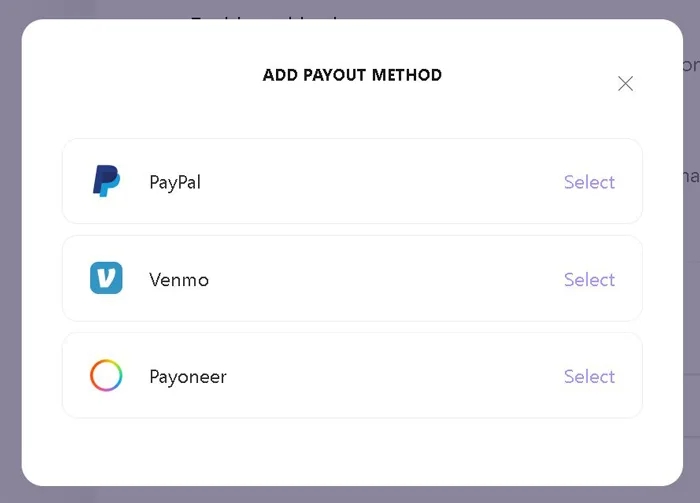
The options are PayPal, Venmo, or Payoneer, all three of which are convenient. I counted them as pros, because any of them is easy to use.
And yet, the threshold remains very high.
How long does it take to earn $80 in commissions? A long time. And until then, the money sits in the account, not in your pocket.
I would have set it lower.
How much money can you make?
Your listings on Benable reach people who also have listings to promote.
I haven’t seen any other types of users there (at least not during my testing), and I don’t see why anyone would be looking for anything on Benable other than a place to promote their listings.
So who’s buying, then? Not them. They came to the site with their lists. They’re not interested in shopping at all. We, the ones with lists, just see each other’s recommendations, and that’s about it.
You only earn money when someone clicks through your link to a product on your list. They also have to actually buy it. It’s hard to give an exact figure, because it all depends on how many sales like that you generate. I’ve worked with affiliate marketing long enough to know where a link should go. It goes where people go when they’re looking for something useful. I haven’t come across Benable.
Benable actually says it’s a good idea to take your lists beyond the site.
What’s the point of Benable if you’re still bringing in people from elsewhere? Pretty much none, because your own website does the same thing.
You put the affiliate links on it, and you promote it on social media. The profit is all yours.
You do save yourself the trouble of building your own platform if you stick with Benable, that’s true. You have less work to do, that’s true. But this work isn’t the hard part. Affiliate links only sell if you have an audience. An audience doesn’t come bundled with this platform. It takes time and effort to build an audience so you have people to show the links to properly. You’re the one who builds it. You’re the one who puts in a lot of time, both on Benable and outside of it.
Benable doesn’t convince you that it’s worth choosing. And it seems to me that the money here remains small (small, not nonexistent), especially compared to what affiliate marketing can yield when it reaches its true potential.
You’ll do better with your own website or, for example, with a YouTube channel where you post affiliate links. But generating real traffic takes just as much work no matter where you are. I learned this the hard way, so you’re better off working for yourself.
No one takes a cut of your earnings. That’s a great way to build a sustainable side income.
It worked for me.
How do you ask for help?
Not all of Benable’s features are clearly explained, and it’s a bit frustrating that they haven’t been more transparent here, since then you wouldn’t have to send so many questions to support.
I went to the FAQ section on the website and saw that it’s their official documentation, with pre-written answers. What does it cover? Accounts and fees on the platform. These are basic topics (and it doesn’t even cover all of them, just some of them). That’s pretty much what you need to get by on Benable. When you can’t find an answer there, reach out to the support team.
Their email address is [email protected]. There’s also a contact form. It opens when you click the message icon on the dashboard.
There’s also a live chat feature, built right into the platform’s official pages. Its icon is purple and sits in the lower-right corner of the screen, which is where I launched it. Its purpose is to resolve questions quickly.
Benable provides members with the minimum support they need.
I have no reason to complain here, because you have several convenient options to choose from.
Who can use Benable?
Benable doesn’t require any followers to approve your account.
It doesn’t matter where you live, because the platform is open to anyone anywhere in the world.
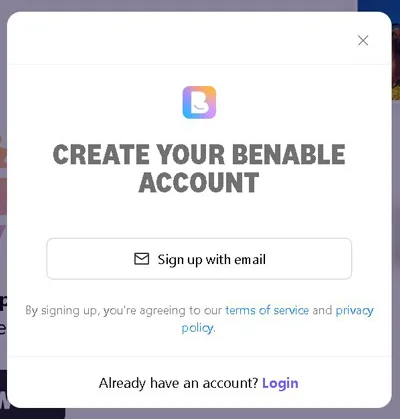
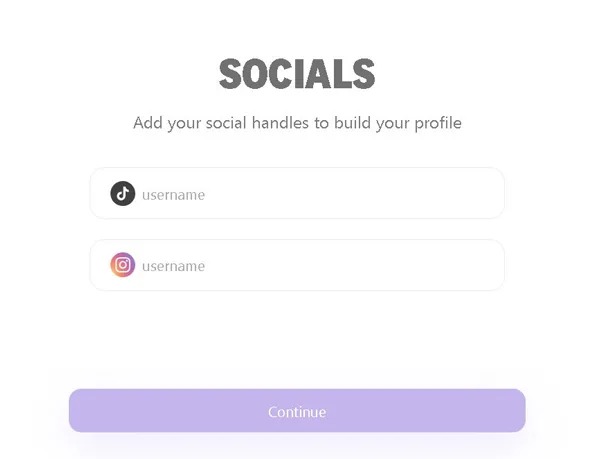
I signed up with my email address. You could also use a Google account, but there are no other options. Right after that, it asked me to complete my profile and post my first recommendation, and the steps came one after another, so I just followed the prompts. Only after I finished those did I log into my account and start making lists.
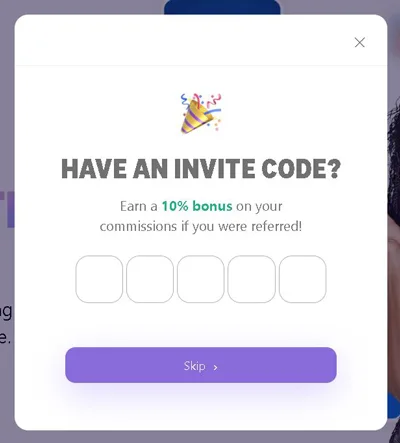
The only real requirement is age. You must be at least 18 years old (or the legal age of majority in your country, if that’s a different age) to sign the affiliate agreement and receive payments.
The technical side isn’t difficult either. You paste the product link, and Benable automatically pulls the details, without any code or advanced technical knowledge required.
So where does the money come from? From what you do once you have the account, because the account itself doesn’t pay anything.
You need a niche and products that fit it, a little copywriting so you have something to write in your lists, traffic brought in from outside, from platforms like Pinterest, and some basic knowledge of how to show up in search results. I think traffic requires the most work (well, out of all four, it’s the only one that doesn’t depend solely on you), because without people visiting your listings, you won’t make any money.
None of this goes beyond the basics.
But it has to be done, otherwise you’ll be left with a completed profile and listings that nobody opens.
Can you use it on your phone?
You need iOS 16.0 or later to run Benable on your iPhone, and the minimum age listed in the App Store is 13+. I found the app there under the name “Benable: for influencers & all.”
On Android, the name is the same, except that on Google Play you can also see who publishes it: Happy Ventures (the company behind it, not another app with a similar name). The last major update was released on August 29, 2026.
So it works on both Android and iOS, so you don’t have to wonder if it’s compatible with your phone.
Does that matter? It does, because you can make lists even when you’re not at your computer. I used it without any hassle and didn’t find any features missing compared to the website. You don’t have to be at your desk to have a chance to earn. You don’t even have to wait until you get home. I think that’s the best thing about Benable.
But the app isn’t mandatory either, if you don’t want yet another one on your phone.
The website is fully optimized for mobile, so you can open benable.com in Safari or Chrome and use it directly in your browser, without installing anything.
Benable Trustpilot
You can get close to the $80 threshold and suddenly find your account deleted without any warning, as several users have reported on Trustpilot.
This isn’t an isolated complaint, but the story looks very different in the app stores.
I counted the ratings. In the App Store, there are 3,200 reviews, with an average of 4.9 out of 5, and on Google Play, I found 1,260 reviews, averaging 4.8. On Trustpilot, there are only 19 reviews, and the average drops to 2.6 (it’s labeled “Poor” there). I couldn’t ignore this discrepancy, because we’re talking about the same app.
What I read in the reviews on the App Store and Google Play (a sample of about 4,460) is almost entirely praise. People say the app is easy to use, looks good, and lets you earn money without making videos. Customer support also gets good ratings because they respond quickly. Some even confirm that they’ve received their money via Venmo or PayPal.
Why are they so satisfied? Because it’s easy to sign up, creating lists is simple, and you earn commissions without needing a large following. I think that last point is what attracts most people, since not all of us have the patience to build a following.
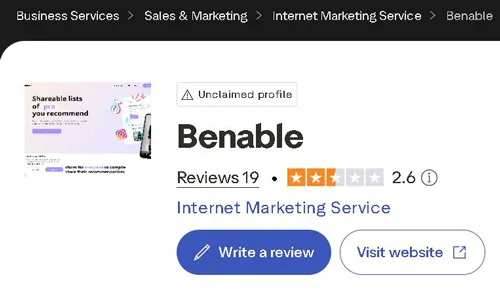
The 19 reviews on Trustpilot that I read tell a completely different story. Some say their commissions were rejected and marked as “disapproved.” Some complain that the follower statistics are poor. Others say the promise of a 10% commission is misleading.
And what about customer support? The support that’s praised in reviews, they say, stops responding when a payment issue arises. So payments do exist for some, but others claim their money was withheld by having their accounts closed.
But a closed account just one step away from a withdrawal carries a different weight than praise for the design, and I don’t weigh them on the same scale.
If you add up about 4,500 reviews from app stores and Trustpilot, the overall rating is positive, though this is largely due to the large number of ratings on the App Store and Google Play. There are few complaints, but they’re serious, because they involve money (which is exactly what you’re interested in with a money-making app). This sample doesn’t speak for all users, so it’s up to you to weigh the pros and cons.
Red Flags you should never ignore
There are no FTC fines associated with the domain name, no action taken by any authority, and no malware alerts in Safe Browsing.
I checked all three and didn’t find anything, so with Benable, you’re not risking a site with viruses. The risks lie elsewhere and aren’t as serious (I was able to verify some of them, others remain mere accusations, though credible ones):
- Accounts restricted or deleted right when they’re about to reach the $80 withdrawal threshold, along with any accumulated commissions. This is reported by several unrelated users on Trustpilot, and I take this one most seriously because it hits right at the moment of payment.
- “Pending” fees that often end up “rejected” or “canceled” without a clear explanation from the platform. Another credible allegation.
- The sign-up process is overly gamified, persistently pushing you toward referrals and emails.
- The privacy policy on benable.com/privacy does not list a designated representative for the EU or the UK and lacks Standard Contractual Clauses for international data transfers.
If you’re in the EU, the data issue affects you directly. It’s a compliance issue (both the representative and the clauses are missing), not just a oversight in the form.
But for me, the threshold is the biggest concern.
Think about what the process looks like leading up to that point. You collect commissions, some of which go from “pending” to “rejected” without you knowing why, and you barely manage to get close to $80. And right then, as many people say, the account gets restricted or deleted. I have no way to verify every single case. I also have no reason to believe they’re all making it up, because the same story keeps happening to people who don’t even know each other.
I wouldn’t work for that threshold.
Is Benable LEGIT or SCAM?
A Public Benefit Corporation registered in the U.S. keeps Benable up and running, but that status doesn’t guarantee you’ll ever see any money.
The withdrawal threshold is $80. I’ve read complaints from several users who say their accounts were restricted or even deleted right before they reached that amount. I can’t confirm every single case (nor could I, since I don’t have access to their accounts), but the same story keeps repeating itself at that same threshold. And for me, that’s a bigger drawback than all the app’s good points combined.
But the app is well-designed.
I looked through the entire app, and the interface is polished and easy to use for micro-creators (meaning people like me, without an army of followers behind them), and what I saw there won me over. You can earn affiliate commissions without a large social media following, and that’s its biggest plus.
So who is it for, then? Someone who wants to keep their favorite products organized in one place and doesn’t mind that the money comes in slowly.
Anyone who wants to rely on Benable for a steady income is taking a big risk.
In theory, Benable isn’t a bad platform. But why would you stick with it? I can’t really think of a good enough reason. It doesn’t guarantee you’ll earn anything. It doesn’t clearly explain all its features. I looked into how some of them work and didn’t find much. And the $80 threshold is high, I think too high for what it offers.
If you’re interested in affiliate marketing, there are better options. You can create your own website or social media channel and post your links there. That way, you don’t have to split the profits with anyone, because the entire commission stays with you.
But if you’re looking for a main site to make money from, check out my article on the top 7 GPT apps. They offer multiple ways to earn and have good earning potential, and among them, you’ll find one you can join no matter where you live.
If you’ve used Benable or have any questions, leave me a comment below.