

Ubiqus On Demand is the name under which the company operates in the United States, through its subsidiary there, formerly known as Verbal Ink. But a name, no matter how long-standing, doesn’t guarantee anything. It’s the work behind the scenes that matters. Transcription, translation, and editing, all from home, on a contract basis (meaning you’re a contractor, not an employee), and this combination quickly attracts anyone looking for language-related work without leaving home. And it’s all the more appealing because paid work involving text isn’t exactly a dime a dozen.
Legit or a scam?
Well, that’s why I wrote this review, to show you how the platform works, what kind of work you can find there, and what else it offers. I’ll go through them one by one. I think the real question isn’t whether Ubiqus exists and pays anyone anything, but what you get out of it, because you know your time and your needs better than I do. I’m not going to give you a ready-made verdict. Read it and see for yourself.
What is Ubiqus and how does it work?
You sign up as a freelancer and take on projects involving language, content, transcription, and translation.
I searched for the domain using WHOIS aggregators, because a portal that doesn’t show you anything until you log in is worth checking out from the ground up. Ubiqus.io was registered on November 16, 2016, with OVH. That date aligns with December 2016, when Ubiqus acquired Verbal Ink (as stated in the company’s description on Trustpilot). I also checked the Wayback Machine to see what the site looked like back then, and I found a public service portal where you could easily read about what they do and for whom. Now it’s a closed platform that requires a login, both for clients and collaborators.
And yes, you can make real money from what they offer, so it’s legit.
But just because it’s legit doesn’t mean it’s worth it. How much time and effort does it take to actually get anything out of it? That’s where you’ll see if it’s worth creating an account, so let’s take a look at how you earn money on Ubiqus.
Freelancing jobs
Rejections are counted.
The invitation comes when your skills match one of their projects, and from there, it’s up to you. You can accept or say no—no one is forcing you to work. It’s just that you don’t want to say no too often, because if they see that you don’t accept very often, they’ll invite you to fewer projects. In my experience, a single refusal doesn’t matter, but a string of refusals stands out. How often is “too often”? No one gives you a specific number.
Once you’ve accepted, the deadline is your responsibility. I’ve taken on both urgent projects and projects where I had plenty of time, so you check the deadline before you say yes, not after.
Don’t accept anything you know you can’t finish.
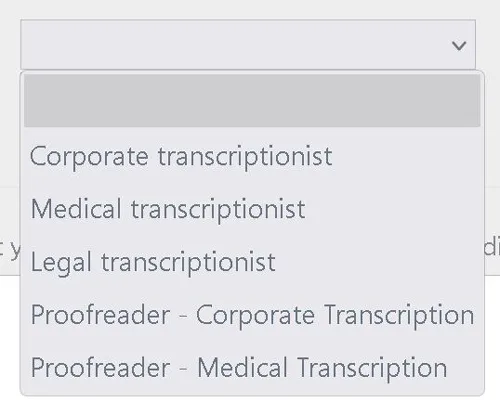
I counted five types of jobs in the photo above: corporate, medical, and legal transcription, and for proofreading, only corporate and medical.
And you work on just one. I checked that job type on my application too, so you choose before you see what their projects look like (that is, without seeing them first). Even if you can do both, you still have to choose one.
How much work you get depends on how many projects they have, the languages you know, your experience, and where you live (you provide three out of four of those, not the projects), and there’s no guarantee you’ll get anything after signing up. Maybe they don’t have enough projects. Maybe you live somewhere where they don’t need anyone.
We’ll talk about payment right away, in the next section. If you’re interested in comparing platforms, I’ve also written reviews of Populii Freelancing, ProBlogger, CastingWords, and Shaip AI.
Technical Equipment & Skills Requirements
You’ll need an up-to-date computer, whether a desktop or laptop, plus a fast and secure internet connection.
In terms of personal skills, they require fast typing speed, active listening, and strict adherence to English punctuation and grammar. But the minimum speed isn’t listed anywhere on their main pages. I looked for it, but it’s not there. The benchmark in the transcript is 60 to 70 words per minute (the industry standard, not a limit set by them), so that’s where you start. But speed alone doesn’t solve anything, because half the job is listening, meaning catching exactly what’s being said when the person in the recording speaks quickly and eats half the words.
A transcription pedal and dedicated audio playback software aren’t on the mandatory list for beginners. Freelancers strongly recommend them, though, for anyone who wants to handle a high volume of projects. Are they worth it? For high volume, yes, because otherwise you’ll have to pause and rewind manually after every sentence.
How do you get paid?
You get paid for every completed project, without having to wait until you reach a minimum amount.
Payment is processed as soon as you submit your work, so there’s no waiting period between you and your money. I read everything they say about payments, and that alone was enough to satisfy me. You’re paid per word for the text you transcribe or proofread, whereas on most transcription sites, you’re paid per minute of audio in the file you’re working on, so the calculation here works completely differently. Which works out better, per word or per minute? It depends on the file. A speaker who pauses after every other word fills up the audio minutes without filling up the page.
It doesn’t say anywhere how much they’ll pay. It doesn’t even say how they’ll send you the money. I looked everywhere, but couldn’t find anything. I’d expect PayPal, Payoneer, or a bank transfer, since those are the methods used on freelancing sites. But that’s just my expectation, not a promise from them.
I think their payment system is actually pretty simple, because that’s how things work on freelancing sites (I’m talking about most of them, not all). If you want to know right off the bat how money is paid out on a site, I’ve written about the top sites that pay via PayPal or crypto, and Timebucks and FireFaucet are included in that list.
How much money can you make?
On Ubiqus, you don’t plan your monthly budget.
Jobs don’t come in regularly, and that’s where the whole problem starts. You can’t know how much you’ll earn during a given period. You can’t even know if you’ll get any work. So you don’t do the math until after something has actually been deposited into your account.
How much do you get paid per job? No one tells you in advance.
It depends on the project, the language, how much the client is willing to pay, and your qualifications for that particular job. I looked for an average figure to use as a guide and couldn’t find one, because the differences from one job to another are huge (I’m talking from project to project, not from month to month). I think the earning potential is low, and not because of the rates themselves.
Pizza money, so to speak.
If you need a steady monthly income, you won’t find it here. Whatever comes your way is just a little extra.
How do you ask for help?
[email protected] is the address where you should send your questions before applying as a freelancer. That’s all the platform offers at this stage: an email address and a response from one of their team members. That’s no small thing. And it doesn’t replace the information you’d want to read carefully before deciding whether or not to join.
Once you’re accepted, support is handed over to the project manager, and you’ll receive everything you need from them along the way.
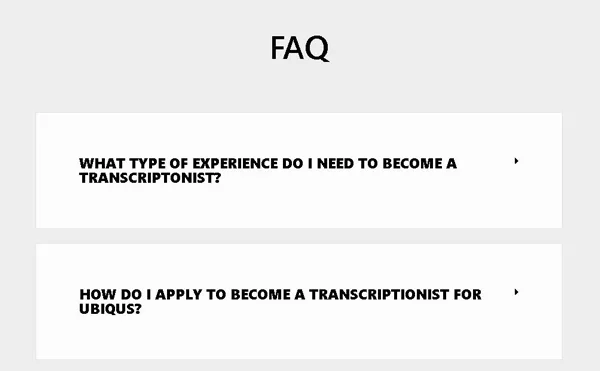
So why do you keep ending up at the email address? Because the FAQ section ignores the parts that really matter (it’s not empty, it’s there and you can read it, but it only scratches the surface). I went through the whole thing and was left with the same questions I had when I started.
The basics are covered, and there’s a place to ask for help, but that FAQ page seems like a missed opportunity to me, because a single answer posted there would save you the trouble of sending an email.
Who can use Ubiqus?
The most important criteria for selection is your typing speed.
No one is asking for experience in the field you choose, so even someone who’s never done anything like this before can apply. It sounds generous. But the entry test is everything, because it’s what determines whether you’re accepted or not. If you don’t do well on it, you’ll be left off the list of freelancers.
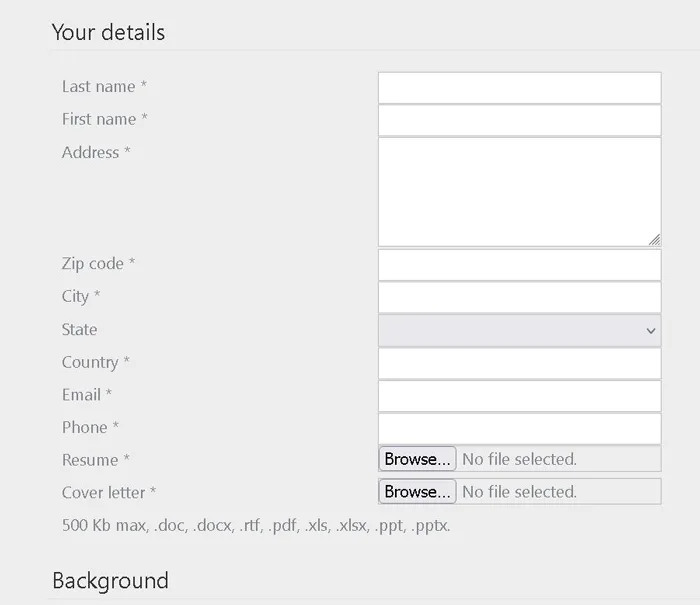
The path to becoming a freelancer has four steps:
- Submit the application form. The test won’t even open until you submit it.
- Choose the type of job from among those we discussed above.
- Take the test for your chosen field. The duration depends on the job you selected (about five to ten minutes), and once you start, you have two hours to submit your work.
- Wait for the review. If you pass, you’ll receive instructions on how to proceed.
Two hours for a ten-minute test seems like plenty of time to me, except that the timer starts when you open the test, not when you actually start writing.
And in which countries does this whole thing work? The website doesn’t say anything, and I really did look.
I completed the freelancer form up to the field asking for the state where you live, which is a required field, and the list only showed states in the U.S. I scrolled all the way to the bottom of the list, curious to see what else would come up. Nothing else. So, if you live somewhere else, you’re out of luck here.
If they accept you, you’ll be added to the list of freelancers considered for projects. Just consider, that’s all.
Can you use it on your phone?
You need a computer. The nature of the work here is such that it can’t be done on a phone, so the answer is no. I looked for an official Ubiqus app in September 2026, for transcription or translation, and couldn’t find one. Not on Android, not on iOS.
In addition to a computer, you’ll need an internet connection that doesn’t cut out in the middle of a file, Microsoft Word, and a program that plays audio files.
Word, not just any word processor (that’s what the requirements say), so you don’t have a choice there. Neither headphones nor a foot pedal are required. Are they worth getting? Pretty much yes, because they significantly increase both your speed and accuracy, and the recommendation comes from them, not from me.
Ubiqus Trustpilot
The company hasn’t responded to any negative reviews, as Trustpilot notes right on its page, and it hasn’t asked for reviews in a long time.
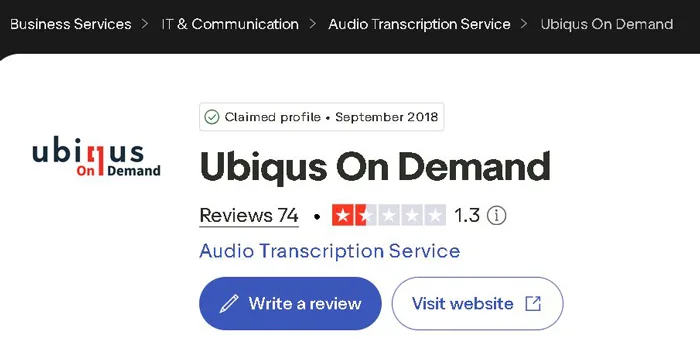
The overall score stands at 1.3 out of 5, based on 74 reviews posted there. I went through them one by one. About 70% are negative, but the divide isn’t based on personal taste, but rather on the time period.
The positive feedback I found comes from large clients and people in the academic community. They praise Verbal Ink’s former accuracy, because they captured that era (their engine is even cited in academic papers, so serious work was put into it at one time).
I looked at the data.
All the five-star reviews are from before 2019 and all marked “Invited,” meaning they were requested by the company itself.
The one-star reviews are from 2023 onward, and nobody asked for them. It seems to me that this disconnect says more than the rating does. Longtime customers have been saying pretty much the same thing since the takeover, with delayed transcriptions, calls that go unanswered, declining quality, and the people they used to talk to disappearing without a word. It all ties together because the brand has changed hands repeatedly, from Verbal Ink to Ubiqus, Ubiqus to Acolad, and Acolad to RWS, and at every step, the old support channels were left behind. The shift became apparent around 2022–2023, right when Acolad acquired the company.
Since then, no one has managed their public image.
I’ve read all the recent reviews from freelancers, and they all say the same thing, that the work went unpaid. You receive documents to transcribe. You work on them and send them back. And when you ask for your money, you’re asked to make an advance payment, $50 for a “freelancer card” or some “codes” to be purchased on a foreign company portal (the reviews are from May, June, and October 2025).
And who’s asking for the money? Well, not necessarily the company itself. Scammers use the Ubiqus name to recruit transcribers, send you work documents, and then direct you to fake payment portals.
You don’t see the money until you pay. You don’t even know who you’re talking to. I wouldn’t pay in this situation.
The 74 reviews don’t cover everyone. Large companies working on contracts handle their issues with their account manager, so we don’t see anything from them on Trustpilot. What do they write? I have no way of knowing. But the freelancer who transcribed the documents doesn’t have an account manager, they just have a $50 request staring them in the face.
Red Flags you should never ignore
The privacy policy is behind a login. I looked for it and came across the login screen. That’s it. Ubiqus works with audio files, medical documents, and legal documents, so what data is collected, how long it’s retained, and to whom it’s disclosed should be clearly visible, not hidden behind a password.
Several recent reviews describe the same pattern, freelancers recruited under the name Ubiqus who deliver their work and are then directed to a third-party site, FEXTARISE.COM, or who are asked to pay for “codes” that would supposedly unlock their payment. It’s the classic task scam, and I believe there’s a network behind it posing as Ubiqus. Does that matter to you? It does, because the name under which you worked is theirs, and you’re the one taking the risk.
I haven’t found a warning from the company anywhere.
People say they won’t release your money until you pay an “identification fee” or “verification fee” up front. They won’t give you what you’ve earned until you send them something.
They don’t even respond to negative reviews on Trustpilot (where a response costs nothing). They don’t answer the phone either, according to longtime customers.
Ownership has changed frequently, and with each change come complaints about poorer service and outdated support channels that have been abandoned.
Ask them for their privacy policy before sending them your first file.
Is Ubiqus LEGIT or SCAM?
Ubiqus On Demand is a legitimate company with deep roots in the transcription industry, but that name guarantees you, as a freelancer, absolutely nothing.
It’s true that they work with universities. It’s also true that they work with large companies. Their academic and corporate clients have stayed with them because accuracy remains their strong suit. Each of these clients has a dedicated account manager on the other end. And that’s exactly what you don’t have when you go it alone.
I couldn’t find any information anywhere on how or when you get paid.
I’ve also run into a wall when it comes to legal policies, which aren’t transparent to outsiders. Their public reputation has been ruined by the corporate takeovers they’ve gone through and by the networks of scammers who recruit transcribers in their name, and we’re not talking about an isolated case here, but an entire phenomenon. No one protects you from them. (The fraud is someone else’s doing, but you’re the one who ends up taking the hit.) It hurts the most because the scam comes right through the very channel where you’d expect a genuine offer or a recruitment message.
It’s not bad. But it’s not good either. I looked into what you can earn there, and it’s limited, and on top of that, there’s the fact that they don’t say anything about how they work, especially when it comes to payments. Is it worth signing up for that? Well, no, not when you walk away with more questions than answers. I think that’s their big problem, not a lack of work. I wouldn’t push it here.
And if you just want to make some extra money, check out this list of the top 7 survey and GPT apps, all of which offer good earning potential and let you quickly rack up a noticeable amount. You’ll find something to get started with no matter where you live.
Have you worked with Ubiqus? Do you have a question or a complaint about it? Let me know in the comments.