
With an online survey site, you can make some extra money quickly, and it isn’t hard, either. That is, of course, when the site is legitimate.
If you want one that actually pays well, not one that bounces you from one questionnaire about brands to another, your standards are already higher. And maybe, among the sites you came across while searching, Testable Minds came up too.
Is it a good choice or a scam you should stay away from?
The short answer is yes. Testable Minds is an online survey panel, and it pays you for the studies and surveys you take part in on the internet. Many people mention it in the same breath as Prolific (and I think it’s hard for a survey site to get a better compliment than that).
But a site that pays isn’t necessarily one worth spending your time on. There are a lot of paid survey sites, and if you don’t size them up first, your time may go to exactly the weak ones, where you spend a long time and earn little.
To tell whether Testable Minds is one of the good ones, there are several things to weigh. Below, I’ll show you exactly what the site offers and what it looks like once you’re inside, and with all of that in front of you, you’ll know whether you want to become a member.
What is Testable Minds and how does it work?
On Testable Minds, you take part in psychology experiments and behavioral studies, run mostly by people in academia, researchers from universities everywhere, not by market research companies that want to sell you toothpaste.
Your answers go into research, and you get paid for them. And the site is trustworthy.
Many of the studies are funded by universities, which is why they usually pay better than a regular survey site. That says a lot to me, because with a survey, what matters is how much you get for the time you put in. That’s what makes Testable Minds stand out.
How much you can make on it only becomes clear once you see the ways to earn, though, so I go through each one below.
Psychological and behavioral studies
When I logged into my account, I had 6 paid studies in front of me, and that was about it (you may see more or fewer, depending on where you’re connecting from). On Testable Minds, they’re the main way you earn, and you’ll find them in your account from the moment you become a member.
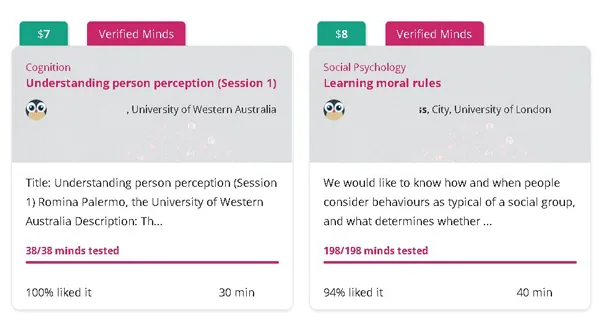
Each study is posted by a researcher, with their own questions, and it’s rare for two of them to ask you for the same things. In my case, the topics were mostly social psychology, personality, and cognition.
The downside is the speed. University research has limited spots, and a new study fills up within 30-60 seconds of appearing. You barely have time to read the title.
When you open one, you can see the maximum number of people it takes and how many have already signed up. If it’s full, skip it, because you won’t get in no matter how hard you try.
You can’t build an income you can rely on from money you grab this way. It’s more like a fun lottery: you play when something comes up, you help an actual research project, and you still end up with some money in your pocket.
If you get a spot, things go in this order:
- You add basic details about yourself to your profile, like your age or country. Studies where researchers are looking for exactly your profile then show up in your account or reach you as a browser notification.
- Before you click “Join”, you find out roughly how long it will take, how much you get in total, the researcher’s name, which university they work at, and how quickly they’ve approved submissions so far. That last one is what I care about, because it tells me how long I’ll wait for the money.
- The experiment runs in your browser, with strict instructions, which you read carefully. You answer with the keyboard or the mouse.
- At the end, the data is sent to the university and the researcher looks it over to check that you didn’t click at random. Only after they approve you does the money go into your balance, and you withdraw it from there (I’ll go through the payment methods one by one further down).
Here are three studies that have been on the site, along with what they paid (they aren’t the only ones, and others will show up too). The people at Australian National University pay $4 for 10 minutes in “Cognitive Psychology & Empathy”, where letters or pictures of objects go by fast on the screen and you have to decide quickly what you see. At the University of York, “Understanding Human Actions” takes 20 minutes and pays $7. You watch 20 short clips of people cooking or doing other everyday tasks and read a few short texts about them, and the researchers see how well you understand what those people are doing. The third one, “Learning Moral Rules”, from City, University of London, takes 40 minutes, pays $8, and tries to find out how and when we decide that an action is typical of a social group, to show where moral boundaries lie.
Broken down per minute, the first one pays 40 cents, the second 35, and the third just 20, so on the 40-minute study you get half as much per minute as on the 10-minute one.
Even though the pay per minute drops as a study gets longer, it’s still well above what traditional survey sites pay, like Zoombucks, Hagen Sinclair, or Triaba (I have reviews of many others on the blog too). You also learn something from each study, and you know it’s run ethically.
Refer a friend
If you have friends who also make money on sites like this one, Testable Minds gives you something for bringing them in, too. It’s the referral program, which we see a lot on rewards sites, and theirs is pretty easy to understand. You give them your link, they sign up through it, and then you get $1.
That dollar, though, sits behind two $10 thresholds, one for your friend and one for you. There are four steps to get to it, and the first threshold doesn’t show up until the last one:
- From your account, you copy your personal invite link, which is yours and no one else’s.
- You pass it on to whoever you want, by message, or post it on Facebook, X (Twitter), LinkedIn or Google Workspace.
- Your friend opens the link and creates a brand-new participant account on Testable Minds.
- Your friend applies to academic studies, completes them, and when their approved research earnings reach $10, the site automatically adds a $1 bonus to your balance that’s still on hold (pending).
The second threshold is on your side. You can only withdraw what you earn from referrals once you’ve collected $10 from them in total, which means you need at least 10 friends who each get past their first $10, and only then does the first cent reach your bank account.
Your people earn $100 between them so you can withdraw $10.
How many of them get that far? On Testable Minds, studies fill up within a few seconds (as I said above), and even the first $10 is very hard to collect. Quite a few active users complain that they sent the link to dozens of people, that those people quickly got tired of looking for surveys that were already gone and quit before $10, and that they never saw a cent from referrals. I’m afraid many of the people you invite will do the same, even if they’re eager when they first come to the site.
It’s an honest program. It isn’t made for quick money. With the two thresholds, everything moves very slowly, and you don’t see the reward right away. With people who actually want to do studies on the site, the dollars come slowly. With the rest, they don’t.
How do you get paid?
After you finish a study, you see in your account how much you’ve earned, and you see it in dollars. Testable Minds pays in money, not points, and it’s a simple thing I’m really happy about, because I no longer have to do division in my head to see where I stand.
Before you can withdraw it, the money sits as “pending”, meaning in a queue, while a university researcher checks your data and makes sure you didn’t click at random. If the researcher doesn’t look at it sooner, the study is approved automatically, usually within 48 hours.
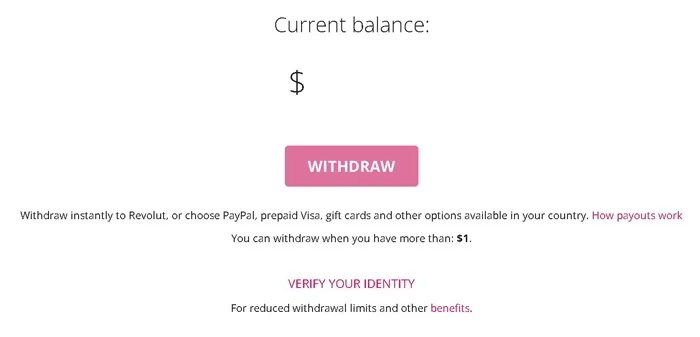
Then comes the threshold. Right now, in 2026, all you need is more than $1 approved, and once you go over it, the “Withdraw” button becomes active on the withdrawals page. That’s it.
The old rules asked for much more: $20 for the first cashout on an unverified account and $10 for each one after that, and $10 on a verified account. With the current threshold, you no longer end up with money stuck below an amount you might never even reach. But the threshold isn’t the hard part here. The hard part is that you can’t find enough studies.
That’s exactly why I’d verify my account right away, with my passport or my driver’s license. You get the lower thresholds and access to more studies, which matters when there aren’t many of them.
When you withdraw, you can choose Revolut, PayPal, prepaid Visa cards, or gift cards (the last two depending on what’s available in your region).
With PayPal, withdrawals go out in batches, on Tuesdays, to all countries. If you send your request after the Tuesday batch has closed, your money sits for another week.
I’ve used Revolut, and the difference is obvious (the money arrived a few seconds after I hit withdraw, at no cost). Revolut doesn’t accept commercial transfers everywhere, though. In India, for example, it isn’t accepted, and if you live in a country like that, you have to go with PayPal.
Testable Minds doesn’t charge you anything to withdraw. The fee comes from PayPal, and it goes up to 5%. Is 5% a lot? On $1, the current threshold, you can end up with 95 cents, and on small amounts withdrawn often, that fee eats up more than it seems.
Where Revolut is available to you, I’d use only that and skip PayPal.
How much money can you make?
On the money side, Testable Minds caps you at $50 a month on its own. Over a year, that comes to $600, and you can’t officially withdraw more than that. The limit is there so people don’t see the site as a job, because they want people who really care about helping science, who fill out the surveys and take part in projects out of interest. At least the rule is spelled out clearly on the site. On the platform, I’ve also seen what happens to anyone who works in a rush and doesn’t take it seriously: their work doesn’t get approved.
The studies themselves pay well, at least on the sites of this kind that I know, because a study involves more tasks than a regular survey. Good pay per study doesn’t add up to big earnings, though, and I think that’s where the whole advantage gets lost. You can’t find studies whenever you want, so you don’t get steady money either. When one opens, the race against the other members for a spot starts, and you need patience. To get invitations more often, what helps most is a completed profile and a verified account.
Patience helps, but the country you log in from decides almost everything. The studies come from Western academic institutions, so most of the invitations go to the US, the UK and the eurozone, while in developing countries or countries outside the West, a main study comes up extremely rarely.
In the US, the UK, Canada and Australia, you get $15-35 a month. That’s with notifications turned on in your desktop browser and a visit to the site every day, so you catch a few standard academic studies each month, paid at $12 an hour. In Western Europe, $10-20 comes in steadily each month, although everything depends a lot on the local language and on the demographic requirements of each study. In India, Africa and South America, as in the rest of the world, earnings stay under $5 a month, and people there say they go weeks or months without a single main academic study.
Even at the top end, the $35 from the US adds up to $420 over a year, far from the $600 limit. With these numbers, no region reaches the limit.
Not even close.
And what about someone who doesn’t live in the West? For them, there are Partner Studies (meaning consumer market research surveys from outside companies, run through Samplicious), put there so nobody leaves without any money at all. They’re always available, 24/7 and anywhere in the world. The only thing is, you don’t get the guaranteed $12 an hour rate of the academic studies, and the risk of getting kicked out of a survey about halfway through is high.
From the US or the UK, Testable Minds is a small income, but a well-paid, good-quality one that’s really worth making time for. From anywhere else, the potential drops a lot, and anyone counting on it as a source of money will mostly end up frustrated.
Testable Minds Trustpilot Reviews: What Users Really Say
When people write positively about the site, most of them mention the studies. They’re psychology and behavioral studies that keep you focused and get your brain working, and I think that after so many marketing surveys with the same questions over and over, you can feel the difference.
The money side works well too. Revolut payments reach you right away, you lose nothing on currency conversion, and with a verified account you can request a payout from $10. A low threshold and no fees, just the way I like it. I haven’t come across any confirmed case of someone being left without their money, either.
But to reach that $10 you need studies, and you have to wait for them. Many people say they waited weeks or even months for a single invitation, and when it came, the study didn’t work: it either threw errors or wouldn’t load, because of whoever set it up, not because of the site. A lot of time, for nothing. Because of this, earnings stay small and capped, and you never know how much you’ll end up with.
The site itself gives you no trouble. It’s simple and clean, and the only thing holding you back is the number of studies. Support is a bit worse. The staff are friendly, but people on forums say email replies are slow, especially for identity verification (the $10 threshold depends on it). If I had to grade it, I’d put it somewhere between poor and average.
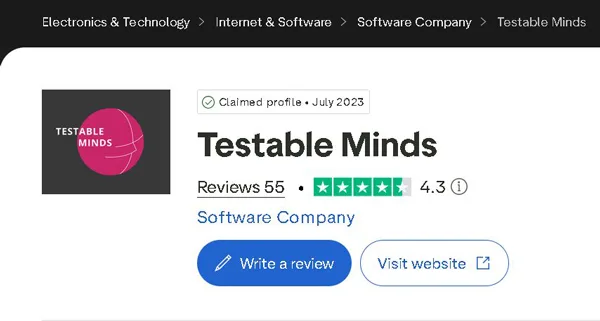
Trustpilot has 55 reviews with an average of 4.3 stars, and together with forum opinions, that comes out to about 80% positive, 15% neutral, and 5% negative. Almost nobody writes that they were cheated or didn’t get paid, because almost everything negative comes from the lack of work. The positive side comes from the site’s serious academic approach and from the enjoyment of doing studies that actually make you think.
I haven’t found any scandal or policy change that turned people’s opinion around. Since launch, everyone has seen it the same way: as a niche, trustworthy site you use alongside Prolific or Respondent when you’re already working on them.
Red flags you should never ignore
The only thing some people complain about on BeerMoneyForum is the ID photo.
Without it, you don’t get to the better-paying studies, and you can’t cash out at the $10 threshold either. Even though it’s a standard KYC requirement, some people had a hard time getting past it, and sometimes they even ended up with a locked account. That’s what I’m afraid of: failing at the very step that lets you take the money out.
They say it themselves: there’s an earnings cap, for example $50 a month, so that people stay for the scientific research and not for a full-time income. At least it isn’t hidden.
I searched hard, online, on Trustpilot and on BeerMoneyForum, for complaints about scams, payment fraud, and leaked personal data, and I didn’t come across a single confirmed accusation. The money does arrive through PayPal and Revolut, people keep writing. As for your data, the company says in its data processing statement that it doesn’t sell it and that researchers receive it anonymized (I have no way to check that).
I didn’t find any trick around consent either, and the privacy policy and the cookie notice sit in the footer, in plain sight, even without an account.
Who can use Testable Minds?
At Testable Minds, it doesn’t matter what country you’re from. There are no accepted countries and left-out countries: anyone in the world can go through their form, and only people who have turned 18 can access studies.
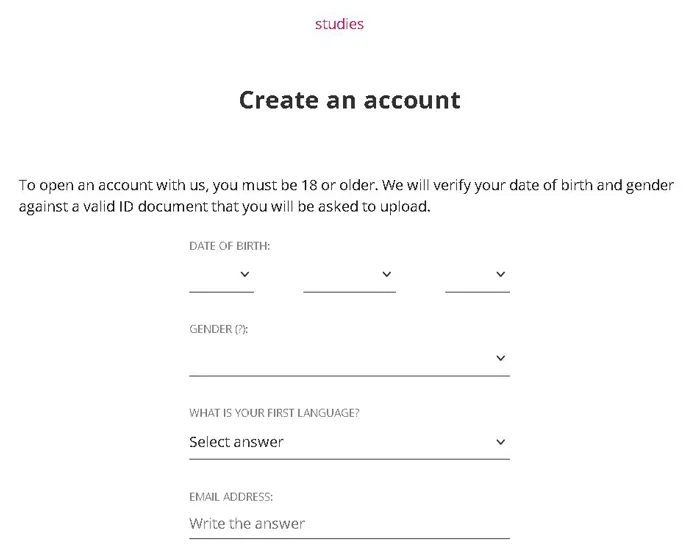
The hard part can be the phone. For verification, you need a local phone number and an internationally recognized official ID. If you live in a region where SMS messages arrive whenever they feel like it, you may get stuck right at the start of the sign-up.
The steps I went through, from the first button to the documents:
- I clicked “Create your account,” and the form only opened for me after a CAPTCHA.
- I filled in my date of birth, gender, email, and mobile number. I typed the number carefully, since that’s where the 6-digit SMS code arrives (which means you need a phone you have on hand).
- I entered the code and confirmed my phone, and then the email address was next.
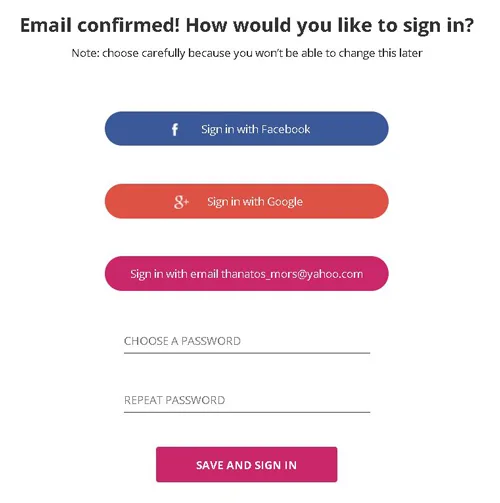
- When I got to the password, there was also the option to sign in with Facebook or Google, for anyone who doesn’t feel like using email. I stuck with email. You might prefer something else.
- Last came the identity verification, with a passport, permanent residence permit, ID card, or driver’s license. I could have finished my account without it, but you still can’t avoid the verification.
If the SMS doesn’t arrive right away, it’s tempting to try another email. Don’t start making new accounts! Multiple accounts get you a permanent security shadow-ban. Don’t risk your account over a code that’s running late.
All these checks have a purpose. The sign-up is built to keep out bots, minors, and people looking to take advantage of surveys through so-called survey farms, and it’s completely safe, even though your details are cross-checked very strictly. It’s not a form to fill out in a hurry with approximate details, because every line has to be written exactly as it appears on your documents.
With your details written correctly, you get through.
Can you use it on your phone?
On your phone, you get to Testable Minds through the browser as well, with Chrome, Safari, or whatever you already have installed, because there’s no official app, not for Android and not for iOS. You log in and get to your account the same way you would on a laptop, and all the content is easy to read on the small screen too, without having to struggle with it.
So far, nothing to complain about.
The studies are the hard part. About 80% of the main academic studies spell out “Desktop Only” in the description, and for good reason, since they have more complicated steps than a simple survey where you check off answers. If you rely only on your phone, you get to a small part of the good studies on the site (the rest simply stay closed to you).
For new studies, Testable Minds doesn’t notify you by email. It only alerts you through browser notifications, which you turn on yourself in the browser settings, where you allow the site to send them to you. In your account, there’s a pink bell that keeps track of whether you’ve turned them on.
On a phone, these notifications have a reputation for being slow, much slower than on a computer. But the spots in a study run out in 30 to 60 seconds, and by the time the alert shows up on your screen, the spot in that academic study has almost certainly gone to someone else. Honestly, there’s no point having notifications on if they arrive after everything’s been taken.
I think it’s much more convenient for you to do the studies on a computer. Without a computer, Testable Minds isn’t worth the time you’d lose on it. With just your phone, you stay in “Partner Studies,” the section that pays less, far from the studies you actually come to Testable Minds for.
Is Testable Minds LEGIT or SCAM?
On Testable Minds, how much you make depends entirely on the country you live in. If you live in the US or the UK, where enough studies come up, you have good reason to create an account. If you live in a country where you don’t always find studies, you get nothing out of it.
There are still the referrals, you might say. There are, even though with those you wait quite a while before you see any money, so they don’t help you now, when you want to earn.
Otherwise, it’s a legitimate site and it operates transparently, with university psychology studies that people get paid to answer online, with good tasks that actually require thinking, and with payments that arrive every time, through Revolut or PayPal, starting from a very low threshold. That made me happy: small amounts reach you and don’t stay stuck in your account.
It’s just that studies rarely come up. Very rarely.
So rarely that you can’t put it first among your income sources, and you can’t count on it consistently either.
For anyone who enjoys thinking tasks, memory games, and psychology tests, it’s a different story. You can keep the site open in a tab, behind the others, and catch a well-paying academic study now and then (it’s rare, but it happens).
And if you want to help science, you find their studies interesting, and you wouldn’t mind some money earned along the way, I think it’s a good site to try.
For more opportunities and more kinds of surveys, I’d move on to the list of the 10 best money-making sites. They all have good potential, so you have enough places to earn from regularly, and among them there’s also one you can join wherever you live.
If you have a comment, a question, or an experience with Testable Minds to share, I’ll be waiting for you below, in the comments.