

Answering surveys and getting paid for it. That’s more or less what Triaba promises, a survey panel you can find in many countries.
Is it a legitimate site or a scam? And even if it is legitimate, is it worth the time you spend on it?
I don’t publish reviews of survey or GPT (Get-Paid-To) sites until I’ve tested them on my own account. I’ve been on Triaba for over a year, and I’ve done everything there that someone who wants to make money from surveys does: I’ve filled out surveys, I’ve been disqualified from some (more often than I would have liked), and I’ve seen what it’s like to have an account there and how much you can earn.
I’ll start with what you probably want to know first. Triaba is legitimate. It pays.
But a site that pays isn’t necessarily the right site for you.
Below, I’ll tell you how Triaba worked out for me and show you everything it has, the way it looks from inside the account, so you know from the start what to expect and can decide for yourself whether the surveys here are worth your time.
What is Triaba and how does it work?
I looked up the triaba.com domain in the WHOIS registry, on whois.com, and it shows as registered on April 20, 2009, through One.com A/S, with the owner listed in Ås, Norway. So it’s more than 15 years old, a respectable age for a survey site.
Triaba is an international site that market research firms and organizations use to find out what consumers think. They ask the questions, and members answer and get paid for every survey they complete.
There’s nothing else you can do there. You only earn from paid surveys (no videos, no offerwalls from other companies, no other kind of task). If surveys are all you want, without getting lost in dozens of options, that’s a very good thing.
To tell whether Triaba suits you, though, what matters is exactly what you get from it, and that’s where I’ll start, with how you build up your earnings there.
Taking Triaba Surveys
On Triaba, surveys are the only way to make money, as I mentioned above, and you don’t even have to go looking for them. When you have a new one, you get an email with the link, you click it, and you’re in the survey without having to open the site.
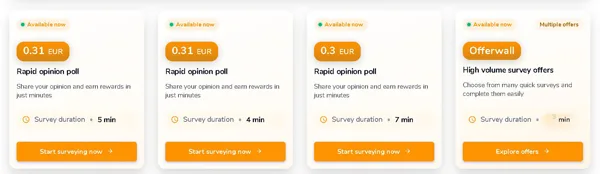
I opened the site when I set up my account and filled out my profile. Since then, I only open it to check my balance or to request a payout. That’s about it. The page is simple, nothing on it distracts you, and you can get started right away.
Each survey shows how much you’ll earn and how long it should take, which I like, because you can see before you start whether it’s worth it to you.
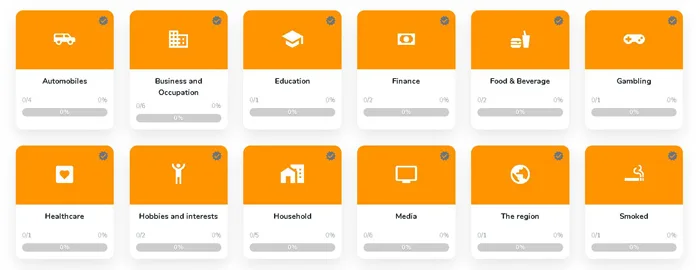
However, the survey list stays hidden until you fill out at least 70% of your profile. You have 33 questions to answer, grouped by category:
- 6 on business and occupation, and 6 on media as well
- 5 on household
- 4 on cars
- 2 each on finance, food and drink, and hobbies and interests
- 1 each on education, gambling, health, region, smoking, and travel (the most categories, with the fewest questions)
Triaba says it uses these answers to match you with its market research clients, and the more up to date your profile is, the more surveys you get into and the less often you get stopped at the opening questions. This is also the reason behind their requirement that you update your profile on the spot, as soon as something in your life changes.
On Triaba too, like everywhere else, you don’t qualify for every survey you’re invited to. Still, I got accepted more often than on a lot of other sites, and that’s a big plus.
How many surveys you see depends on the country you live in and on your profile, like on any survey site. In my case, the list only showed up after a page refresh, with 4 surveys paying €0.30 and €0.31. All together, they don’t go over €1.24. For a 33-question profile, that’s not much. Officially, Triaba mentions 1 to 20 surveys a month, with the first survey arriving 1–3 weeks after you sign up. Maybe I was the unlucky one and you’ll get more.
Compared to HeyCash, Survimo, Marketagent, or Surveoo, which I’ve tested myself, 4 surveys is very little.
How do you get paid?
Everything you earn from surveys on Triaba builds up in your account as real money, in your country’s currency, and you can withdraw it once you reach the threshold. But both the threshold and the way you get paid depend on the country you signed up from.
Where PayPal is available, you get it as an option too (makes sense). Where it isn’t, Triaba pays you in other ways, and in most countries you get to choose between a few options anyway. I’m actually curious which methods you see in your account, so if you feel like it, leave me a comment listing them.
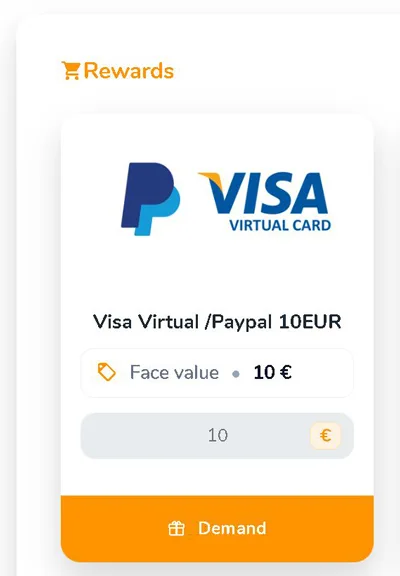
For PayPal, the minimum isn’t the same even across their own official pages. The FAQ pages for the United States and for the rest of the world say $12.50, even though on the local sites, like the ones in Europe, the rule is completely different and you need a fixed balance of €10. A bit confusing.
Then come the conditions, which are good to know ahead of time:
- Your PayPal email address has to be identical to the one you gave when you registered on Triaba, letter for letter.
- A fee of between 2% and 5% comes out of every payment, depending on which processor the money goes through.
- The payment isn’t finished the moment you request it. It waits in your PayPal account until you approve it yourself, manually, from there, and I don’t see why you have to give a second approval for money you’ve already requested.
- You have 30 days to approve it, and if you miss that deadline, the money goes back.
€10. Or, more precisely, between 9.50 and 9.80 after the fee comes off. For money collected from surveys, that’s not nothing.
How long you wait for the money depends on the withdrawal. A regular transfer arrives, they say, in 1-5 business days. They deliberately slow down your first withdrawal, though, so you could wait as long as 10 business days while someone on their team checks it manually to catch fraud.
You’ll also find the $10 threshold with crypto, where you can convert your earnings into Bitcoin, Litecoin or Binance.
How much money can you make?
When you get an invitation from Triaba, by email or directly on your phone, you see right away how much the survey pays and roughly how long it takes, so you can decide before you start whether it works for you.
Most surveys pay between $0.50 and $1.25 for 15-20 minutes of answering questions. The $5.50 the site shows does exist, but you rarely see it. If you get 50 cents for a 20-minute survey, you’ve worked for less than 3 cents a minute.
How much you get per survey also depends on where you’re logging in from. For the US, Triaba lists between $0.50 and $5.50 for each completed survey, and in Europe between €0.10 and €1.80 (sometimes more). There are plenty of surveys, although how many invitations you get depends on your country, your interests, your age, and other things like that. Their help pages give an estimate of between 1 and 20 surveys a month. I’ve had 4, which I wrote about above. I hope that number goes up (and maybe you’ll get more than I do).
Everything looks different once you also count the surveys that don’t get finished in your monthly total. Say you get 15 invitations in a month. Of those, about 70% disqualify you in the first 3 minutes, another 20% get stuck on an error or reach their maximum number of participants before you finish, and only 10% end up paying, which means 1 or 2 surveys out of all 15. The disqualifications are what bug me, since they eat up more than two-thirds of the invitations. In the end, you can realistically make between $1 and $5 from Triaba.
That’s it, for a whole month.
Even though the amounts are small, Triaba pays well for completed surveys, better than a lot of similar sites do (again, depending on the country you live in). For some extra money made the easy way, it’s a good option, and that’s exactly why a lot of us use sites like this one.
How do you ask for help?
If something goes wrong on Triaba, there’s no phone number you can call and no chat on the site that answers you right away. You write an email and wait for a reply.
And the email has to reach the right place. Triaba is a Norwegian company, but it works with Syno International and Cint, two large partners that do market research around the world, so you end up with one or the other depending on the kind of problem. The technical side (your account, survey errors, points missing from your account, withdrawals that never arrive) is officially handled by Syno International, not Triaba.
You have four places you can write to:
- [email protected], at Syno, where Triaba wants any problem to go: trouble with your account, a survey that got stuck, points that weren’t added, or a late payment.
- [email protected], also at Syno, officially listed for platform administration.
- [email protected], where you reach the Triaba team directly, as a second option (although, going by the name, you’d think that’s where to start).
- The company’s postal address, shown on the site and kept for formal, business, or legal notices.
Whoever you write to, your password stays with you. Triaba asks for this explicitly, because support identifies you in their database by the email you signed up with and doesn’t need your login details.
The reply, when it comes, comes very slowly. In recent reviews, several people say they wrote about missing points or an account verification that expired and never heard anything back.
It’s worse with bans. People who were banned automatically right at the moment they tried to withdraw their money wrote to both addresses, [email protected] and [email protected], and then got a system-generated refusal or silence. Nobody reopens the case. I’m afraid that once you get to this point, your email is just a formality nobody reads.
With complicated errors, like rewards stuck in a processing loop, things aren’t any better either. People get generic advice, the same for everyone, without anyone checking what happened on their account.
I recommend you note down the ID of every survey and take a screenshot of the completion page at the end before you submit it. That way you have proof on hand if a credit doesn’t register, and you can send one clear email with the ID and the proof to [email protected]. If nobody replies after 5 business days, consider the credit lost and move on to other tasks.
A lost reward or a ban issued for compliance reasons isn’t something their support will fix for you, and it’s good to know that from the start.
Triaba Trustpilot
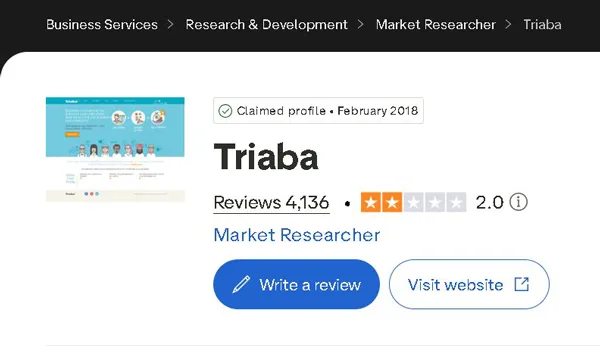
Getting 85-90% of the way through a survey, with almost every question answered, and then getting kicked out right at that point is the complaint you’ll find most often on Trustpilot. There are 4,136 reviews there, with a rating of 2.0 out of 5 (“Poor,” on their scale), and almost all of them are negative. What upsets people is the time they put in for nothing and the feeling that the payouts are rigged so they don’t come through.
The frustration comes mostly from the automatic rules the site uses to check surveys. If you answer too fast, the system flags you for “speeding,” and the same goes if you get a trap question wrong (the kind put there to see whether you’re reading). Even though I understand why a survey wants answers from someone who read the questions, people feel these rules are applied unfairly, just to avoid paying them.
On top of that, four problems keep coming up, almost identical, in hundreds of cases:
- Completed surveys that don’t show up in your balance, as if you’d never done them.
- Accounts banned without warning, right when the person was getting ready to request a payout.
- Payout thresholds that go up out of the blue. Someone reaches the $6 they were aiming for, then finds out the threshold is now $12.50, which means another $6.50 to collect on top of what they had already saved up.
- Rewards paid as a virtual Mastercard that doesn’t get past local banks’ rules (PSD2, here in Europe) and can’t be used.
The threshold that moves bothers me more than any disqualification. How can you know how much you still need to collect if the target goes up exactly when you reach it? The card that doesn’t work with the bank is the same kind of problem: the money exists, it just doesn’t reach you.
The few who praise the site got paid through PayPal and say signing up was simple. From what they write, they’re the people the speed rules didn’t flag.
We don’t get the company’s side.
The company doesn’t reply to people who give it low ratings on Trustpilot, so in disputes over money, you have nothing to compare people’s stories with. And these stories are too similar from one person to the next for me to chalk them up to bad luck.
Red flags you should never ignore
On Triaba, the rules leave the site room to withhold payment at almost any time. In the FAQ, they say clearly that they deduct from your earnings (they call the deductions “negative incentives”) or close your account if you go through a survey too fast, if one answer doesn’t match another, or if you give the wrong answer to a question placed there specifically to see whether you’re reading, a “red herring.” You don’t find out which question you got wrong. They decide, and all you see is the lower balance.
The rest of the risks come from reviews and from their privacy policy:
- Suspensions for “violating the rules” right when the user asks for payment, described by several unrelated reviewers, some of them active there for years. There’s no appeal.
- Payout thresholds that go up just as you reach them, or rewards that, once earned, can’t be used in your country.
- Useless automated replies from an AI to emails about missing payments (just when you need a person).
- Personal data passed on to third parties, including Cint and Syno, without a named DPO or any written retention period. For anyone who lives in a country with strict data laws, this means a compliance problem as well, not just a privacy one.
The bans scare me, even though I only know about them from what other people write. Anyone who has been collecting points on Triaba for years has even more to lose the moment they ask for payment, and the FAQ gives the site a reason at any time, one it doesn’t show you. I wouldn’t leave points sitting there for long.
Who can use Triaba?
When I signed up for Triaba, I looked for my country in their list of countries, entered an email address that works, my postal code, my gender, and the year I was born, accepted the privacy policy, and the account was set up. A short form, nothing more.
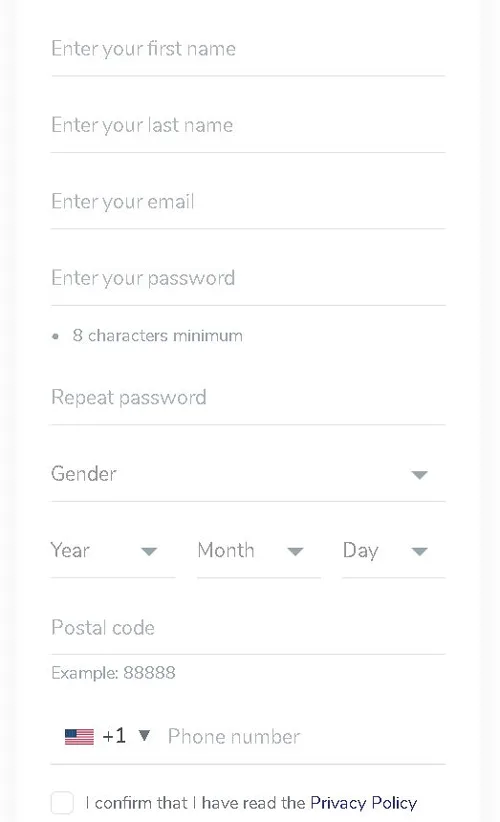
The country list matters more than it seems at first glance. Triaba doesn’t give you one account that works anywhere. Instead, it keeps a separate survey panel for each country, in the language people speak there, and you can only get in through your own country’s page.
As of this review update, these separate panels run in over 110 countries (the US, Canada, the UK, Romania, Moldova, and roughly a few dozen more across Europe, Africa, Asia, and the Americas).
The minimum age is less clear. The main pages for each country don’t list any limit that applies everywhere. But Triaba runs its whole platform on the Cint Digital Research Network Engine and on Syno International, and from Cint it inherits the basic legal limits, which in most countries let you open an account at 14-16 with parental consent, or at 18 without anyone’s consent. I’d have liked to find out something this simple straight from them, not from the rules of a backend system.
The panel you pick has to be for the country you physically live in. Their system tracks your IP, and if, for example, you sign up for Triaba USA while you’re in another country, it flags your account right away. It works the same the other way around.
Then there’s the email. The address you log in to Triaba with has to match the one on your PayPal exactly, letter for letter. If you start with your student email and then request your money to a PayPal account with a different address, the transfer often gets blocked as an anti-fraud measure, and you end up waiting for a reply from very slow email support just to get money you’ve already collected. Check the address before you create your account!
The sign-up part is easy. For things to keep working after that, what matters is how fairly you deal with the site, meaning you sign up from where you actually are, turn off your ad blocker, VPN, or any other network that hides your data while you’re working on Triaba, and answer the profile questions completely and honestly.
Can you use it on your phone?
If you search for Triaba on the App Store or Google Play, you won’t find it. They don’t have an app of their own.
Until recently, there was at least OpinionAPP on mobile, an app where you could answer surveys from several companies at once, Triaba among them. Now they’ve officially cut ties with it, so on your phone you’re left with the browser and the invitations you get by email. That’s all.
On your phone, don’t expect anything smooth and modern. It’s still the same website, opened on a smaller screen, and I think that’s how you should take it.
For the surveys to work, do this before you open the link you got: turn off your VPN, ad blocker, and private browsing, open the link in Safari if you’re on iOS or in Chrome if you’re on Android (you’re better off leaving data-saving browsers aside), and wait until you’re on a stable Wi-Fi network.
On a connection that keeps dropping, the page loads slowly and ends up timing out, and their tracking script can break off halfway through. On good Wi-Fi, this happens a lot less often.
Is Triaba legit or not?
On Triaba, you often get to the last questions of a survey and only then find out you don’t qualify. Just as often, some people find their account suspended, with no reason they can understand.
It all comes from the survey quality rules, applied by an automated system that never shows you what you did wrong, and the result is the same every time: time wasted, nothing in your account, and no one to explain it to you.
The surveys don’t even come directly from Triaba, but through companies that pass them on, like Cint. When you get disqualified, the blame falls on them (and Triaba escapes it). But you’re left with the same problem.
It’s the same with payments. If something doesn’t work, you get more automated messages than help from support.
And yet, it is trustworthy. Triaba collects surveys from market research companies. It isn’t a trap for your data, it’s been around for a long time, and it’s available in so many countries that there are always surveys for you. That’s the best thing about it.
I think it only suits someone who is patient with rejections, and there are a lot of them, and who isn’t set on a single payment method. Everyone else, meaning most people, does better on more transparent survey sites, a level up from it, that pay you even for a survey you leave halfway through.
For me, Triaba works as a secondary site, one of several you pick up a little from, and in that role it’s an OK choice. Don’t make big plans around it. It doesn’t pay much.
When you want a main place to earn, I suggest you look at the 7 GPT apps in my ranking. They offer several ways to earn, you can make more with them, and wherever you live, you’ll find at least one that accepts you.