

Turo is active in many cities across the U.S. and other countries and offers everything from regular cars to luxury vehicles.
Your car makes money while it’s parked. All you have to do is list it on the platform, and you get paid every time someone makes a reservation.
It seems like something anyone can do.
But before you list your car on the platform, you need to know how it really works, how your earnings are calculated, what commissions Turo charges, and what risks you take when you leave an expensive car in someone else’s hands. I’m writing this review from the host’s perspective, not the renter’s, covering everything Turo offers, how you get paid, who can become a host, and what doesn’t go perfectly, so you can decide if it’s worth getting into.
What is Turo Host, and how does it work?
You rent the car directly from the owner, not from a car rental company’s counter.
That’s the whole idea behind Turo, a marketplace where car owners and people who need a car can connect directly, without any company in the middle. The big advantage is that you completely bypass the car rental counter. To make some money on Turo, all you have to do is list your car on the platform. That’s it.
It’s kind of like Airbnb, but for cars.
How good is it, really? To figure that out, it’s best to look directly at the money side of things. See below to find out how you can earn money.
Rent out your car
Up to $750k is the limit of third-party liability coverage for each trip, provided by a policy issued by Travelers Excess and Surplus Lines Company to Turo. If your car is damaged during a reservation, you can be reimbursed up to that amount.
That’s a substantial amount.
If someone gets hurt or their property is damaged during a ride in your car, this type of insurance protects you from legal claims, whether they involve death, bodily injury, or damage to someone else’s property.
It’s legal protection, not just financial protection.
The full details about the policies aren’t listed on the listing page, but you can get them from Turo’s support team if you want to dig deeper.
The protection plan you select when listing actually determines how much of the money you keep. From my testing, I recall percentages of 70%, 80%, or 90% of the ride price, depending on the plan.
A higher-tier plan means better coverage if something happens to your car during a reservation. But it also reduces the percentage you receive. You choose what you’re willing to risk.
You don’t get extra money from this plan, you get peace of mind for your car.
The principle is simple, you list your car on the Turo marketplace and get paid for every reservation. The listing process itself, however, isn’t exactly a walk in the park.
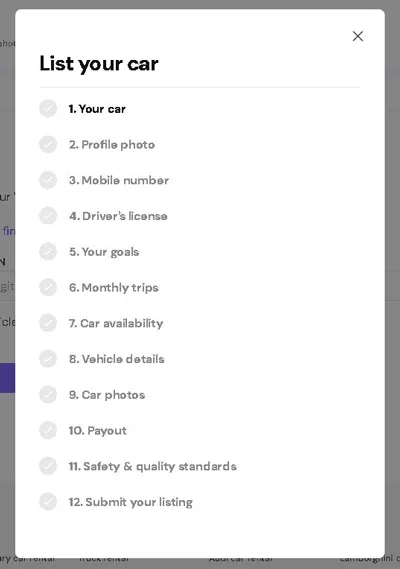
It involves 12 steps in a row, which I went through one by one.
When it comes to the paperwork, Turo asks for a lot of information all at once:
- The car’s VIN
- A photo of your driver’s license
- Phone number
- A few details about what you hope to get out of this
- The car’s availability
- A few more details about the vehicle, in addition to the ones above
In addition to the documents listed above, you’ll also need to provide clear photos of the car’s interior and exterior. This is how Turo verifies whether it can be listed on their platform.
To be eligible, the car must have been manufactured in 2010 or later, have fewer than 130,000 miles on the odometer, and have a clean title.
There’s no single mandatory pricing system. You can use Turo’s automatic pricing option or set your own rates day by day. If you set your own rates, you’ll need to take into account demand in your area and adjust your prices accordingly.
You can also choose how much advance notice you need before a reservation, so you don’t get caught off guard. That way, you’ll know in advance when your car is available and when it isn’t.
During testing, I came across plenty of filters that let you filter out reservations that don’t suit you.
No one is forcing you to rent out your car if you don’t want to.
Once your listing is up, the rest goes much more smoothly. The hard part is getting started, not keeping it going.
How do you get paid?
The first thing I check is how the money goes out, not how it comes in.
On Turo, the customer doesn’t pay you directly, but pays Turo, and the money reaches you only after the reservation ends, via Stripe, directly into the bank account you link there. Unless you’ve set up your Stripe account there, with your bank details entered and direct deposit enabled, you won’t see any money.
A small amount is deducted from the total, depending on which protection plan you’ve chosen. The funds don’t arrive immediately. Processing usually takes a few days.
The system really runs on its own, without you having to request anything or track the payment yourself. I like that, especially the automatic deposit feature.
Pawns and EarnLab are two options where payment works just as easily, via direct bank transfer, PayPal, or crypto. They’re worth checking out if you’re looking for something convenient.
How much do you make as a host on Turo?
The city where you live matters more than anything else when it comes to your earnings on Turo.
In a big city, where there’s high demand for cars and they’re available most of the time, you can make a really good side income.
In a small town, it’s a different story. Demand is low, the car spends more time parked than rented, and you won’t make much money from it.
The rest depends on the car you put up for rent, how often you make it available, and the protection plan you choose. Why can’t I give you an exact figure? Prices fluctuate from one day to the next, especially with that dynamic pricing tool (I’ve told you about it before).
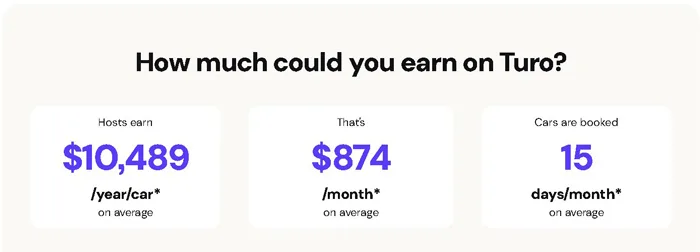
I’ve included a photo above showing the average earnings of a host, just as a reference. It’s not a promise that you’ll make exactly that much, it’s just an idea of what’s possible.
The photo does not guarantee anything.
You can also make a little extra money from optional extras at the time of booking, such as a child seat, camping gear, coolers, phone mounts, and other travel accessories. You can also offer airport pickup—their website even says that’s what most customers are looking for. All of these come for an additional fee.
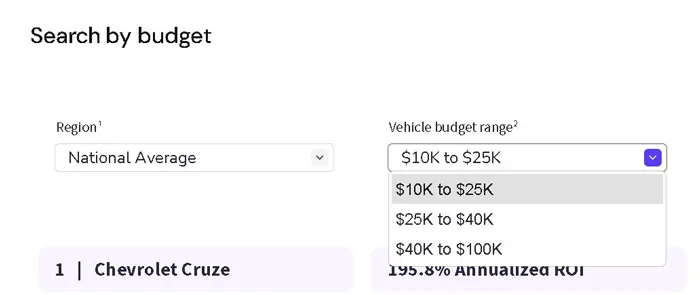
If you’re in an area with high demand, the potential is really good. If you’re not, don’t expect much, especially since people have other options for renting a car. You don’t need complicated calculations. Turo’s calculator gives you a quick estimate, you just choose the region and your car budget.
How to get support on Turo Host?
Turo are și un asistent AI. Îl folosești direct când Help-ul nu-ți dă răspunsul la ce cauți.
Poți scrie și separat suportului, prin aplicație sau direct de pe site, dacă tot te blochezi undeva.
Secțiunea de Help în sine e stufoasă (le-am răsfoit pe toate, nu le-am citit cuvânt cu cuvânt) și acoperă aproape tot ce ai vrea să știi înainte să pornești, de la „Getting started” și „Planning your trip”, până la „Airport delivery”, „Managing your account” sau „Protection”.
Le-am numărat chiar eu. Sunt 12 secțiuni la număr.
Suportul face treaba.
Ai destule locuri unde cauți pe cont propriu.
Iar dacă tot te blochezi, ai pe cineva de partea cealaltă care îți răspunde.
Who can use Turo Host?
If your car is older than 2010, there’s no way you’ll pass the approval process. No exceptions.
But your car isn’t the only requirement.
Where you live matters just as much. The website makes it clear that outside the areas listed below, Turo doesn’t operate anywhere else.
- The United States, all 50 states.
- Canada, but only in certain provinces, including Alberta, British Columbia, New Brunswick, Newfoundland and Labrador, Nova Scotia, Ontario, Prince Edward Island, Quebec, and Yukon.
- Australia.
- France.
- The United Kingdom.
If you’re not in one of these areas, that’s it, there’s nothing more to discuss.
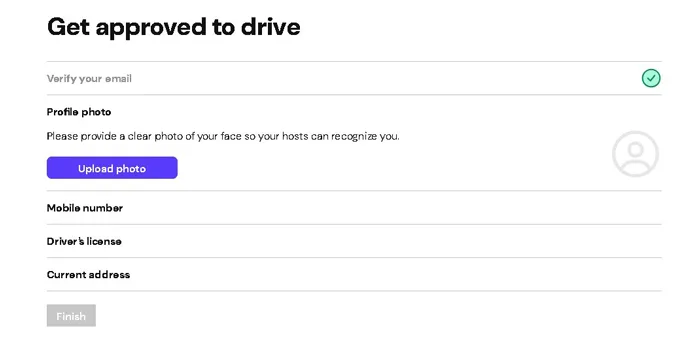
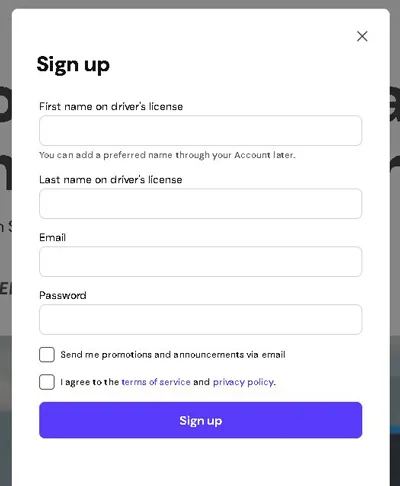
You can create your Turo account using your email, Google, or Apple, whichever you prefer. If you go with email, don’t skip the verification step, or your account won’t be confirmed. Simple enough so far.
When it comes to the listing, things get seriously complicated.
Can you use it on your phone?
Travel insurance is just one step away, with photos of the car and verification of your driver’s license submitted through the app before you hand over the keys. Skip this step, and you’ll be left without coverage.
The Turo app works on both Android and iOS, and is designed for both renters and hosts, allowing you to switch directly to host mode from there.
What do you do there? Four things, mainly.
- Accept or decline reservation requests, view the schedule of upcoming reservations, and monitor active rentals in real time.
- Coordinate car drop-off via the messages section, send the lockbox code, and verify the licenses uploaded by renters.
- Unlock the car remotely and check the photos, either through the manufacturer’s app, integrations like FleetBold, MoboKey, or FleetDog, or directly from Turo Go.
- Update the daily rate, block dates on the calendar, and adjust the booking notice period.
I’d never even heard of FleetBold, MoboKey, or FleetDog before Turo. They do exactly what they promise. They unlock the car remotely.
I always keep notifications turned on, because if you’re late responding to a reservation request, your host rating suffers. And from the bottom or side menu, you can switch back to guest mode at any time if you want to rent a car yourself.
Is Turo worth it as a host?
Safety is what I found most valuable about Turo Host.
You’re entrusting your car to someone you don’t know, but you still have peace of mind. That really matters. Turo Host is a reputable platform with real safety measures. You can make good money per reservation, but only if your car is eligible on the platform.
But it’s not simple.
What exactly does it mean to be a host? It’s much more than just posting a listing and waiting for the money. You handle the car’s maintenance (including insurance), stay in touch with guests, clean the car between rentals, and resolve any issues that come up along the way.
I think 4 or 5 cars is about right if you want to do this part-time (if you grow your fleet too quickly, you risk getting overwhelmed). Check in advance what kind of car is in demand in your area, otherwise you’ll be wasting your money on something nobody wants around there.
The work increases along with the fleet, not just the earnings, but also more guest support, frequent cleanings, oil changes, and without a reliable service provider or a partner you can count on, it’s hardly worth the effort. It almost becomes a small business, not passive income. It’s not easy to estimate how much actually ends up in your pocket after all that.
The idea is attractive, but it requires a lot of organization.
If that sounds like too much to you, Turo Host isn’t for you, and there’s nothing wrong with that.
You’ll find simpler options in my list of the top 10 survey and GPT sites. It’s an option without all the hassle of cars and scheduling. They’re easier to manage, offer good chances of earning money, and no matter where you’re from, you’ll find something that suits you. Let me know in the comments below if you’ve tried Turo Host or if you have any questions. I’m curious to hear how it went for you.