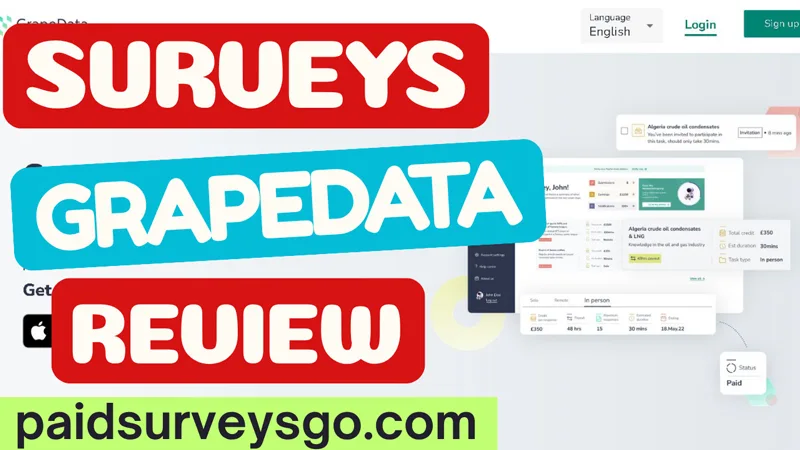

Regular survey sites pay you for what you think about everyday products. GrapeData wants something else from you: what you know about the field you work in and the experience you’ve built up in your job. In return, it promises money and rewards, earned online whenever it suits you.
I liked the idea, because some extra money without a fixed schedule is exactly what many of us want. But the word “expert” makes me smile. Would you call yourself an expert at what you do? I think a lot of people would hesitate, even if they know their job really well.
However, a nice promise is only a promise. What I want to know is whether GrapeData is a trustworthy site that actually pays and is worth your time, or a scam you’re better off staying away from.
I tested the platform carefully, and I’m going to go through everything it offers, one by one and in detail, so you can decide for yourself whether it’s worth joining. Let’s see what I found!
What is GrapeData and how does it work?
When I first came across GrapeData, I was expecting yet another survey site, one of the hundreds you can find online. Paid surveys are one of the most popular ways to make money on the internet, and many sites offer them to you exactly so you can get some money together quickly.
GrapeData is different. The surveys here are tied to the field you work in, so you answer questions about your job and get paid for them. To me, it seemed like an unusual way to earn something extra from paid surveys, because what you know from your work ends up being worth money here.
And it pays. The site is trustworthy, and the money for the surveys you answer really does come in. That much I know for sure.
But that still doesn’t tell me whether it’s worth your time. The answer comes down to what GrapeData gives you in return, how it works, and how much you can get out of it, and that’s what I’m going to look at more closely.
Because even with surveys that pay honestly, you can still come out behind if the time you put into them is worth more than the money you get.
Personalized jobs
A task on GrapeData doesn’t go to just anyone. When a big company needs data (a private equity fund, for example, or a strategy consulting firm), it describes very precisely the person it wants, and an AI matching engine searches the member base for people who fit. It looks at your professional background as verified through LinkedIn, at your role in your industry, and at where you physically are, in real time. Only after that does the task show up on the dashboard, and every task takes the form of a survey.
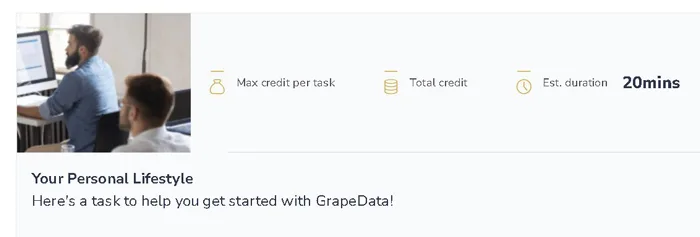
The LinkedIn and location part matters a lot. Clients are looking for “hard-to-reach audiences.” If you don’t link a verified LinkedIn account, or the real-time location check fails, which they run using IPQS metadata, you’re disqualified in almost 100% of cases. I don’t really like that you have to give them both your professional profile and your location for a chance at a task. But I understand why. Verified people are exactly what the client pays for.
When I came across the word “survey,” I expected questions about a shampoo or a movie trailer, as on most sites of this kind. GrapeData collects something else: B2B market information, from one business for another. And what you get depends on what you do for work. Professional B2B surveys go to decision-makers in consulting, corporate marketing, public markets and venture capital, such as an IT manager asked which software, specifically, his company wants to buy this year. For field data collection (data scouting & curation), you need the browser on your phone or another device, because you take photos of store shelves in your area, record audio, or make notes on how certain businesses outside the cities are doing. At the very top are expert calls and focus groups, where you talk directly with research teams or clients and explain in detail how things work in your industry.
Every task has three stages. It starts with a few screening questions that check whether you have exactly the first-hand knowledge the client is paying for. Next comes the task itself: a regular questionnaire or, depending on the task, written answers along with photos, video, data collected in your area, or audio recordings. The last stage is VerifAI, their quality-check assistant, which checks whether the answers are relevant, accurate and coherent before the money comes in. Copied AI-generated text, or data that contradicts itself, gets the response flagged and leads to disqualification.
I think it’s fair to have a check, because the client pays for what a person knows, not for what a program writes. But it’s a shame VerifAI only comes at the end. The photos and recordings are already done, and if the response is rejected, all the work up to that point is lost and you don’t get a cent for it.
There’s a lot of competition. Officially, there are 15 or more active projects per week for 700,000 users worldwide, assigned through very narrow professional filters. If I divide them evenly, it works out to almost 47,000 people per project. The real split isn’t even (the filters leave a lot of people out), but the number shows me how slim each person’s chances of getting a task are.
The good money goes to people who work in private equity, on investment teams, or in strategy consulting. GrapeData’s whole business model rests on these people, with big payouts for anyone who really knows the field. And if you’re not in those fields? The law lets you sign up from age 18, but the expert tasks, the well-paid ones, won’t come your way. Most likely, every once in a while you’ll get a data-collection task in your area that pays less, or something from niche B2C segments.
GrapeData is slow, and it’s no substitute for a steady online job. It’s worth a look now and then only if you have local work that not just anyone does, or less common technical skills. Otherwise, the tasks will go to other people.
How do you get paid?
I created my GrapeData account without paying anything. I thought I’d run into a fee somewhere later on, either when accessing the platform or once I got to the tasks, and I didn’t.
But fees can still come up, from PayPal. When you move the money from PayPal to your bank account, the usual transfer fees can apply and, if the currency is different, so can currency conversion fees. Since payments here can be as small as $1, a small fee takes a big chunk out of them.
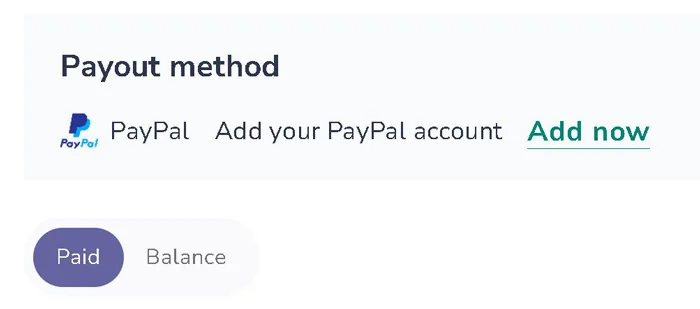
GrapeData pays only through PayPal. I linked my PayPal email address, which has to be verified, from my profile settings, and you can do that when you sign up or later. I’m glad it’s PayPal. It’s a very convenient payment method these days. If you prefer it too, you can also find my reviews of Prime Opinion, Mindswarms, Testable Minds, and Survimo on the blog, sites I’ve tested that pay through PayPal as well.
There’s no minimum withdrawal threshold. The money comes in for each task separately, after approval, and even a $1 preliminary profile survey goes through automatically, without waiting for you to reach $10 or $20. A dollar isn’t much. But it’s yours, and it gets to you without you having to build up anything more, and I really like that.
But that dollar comes from an approved task, and not everyone makes it to the tasks. GrapeData’s clients are investment and consulting firms that want specialized information from engineers, from people who work in corporate marketing, and from niche professionals. If your profile isn’t one of these, you’ll have a hard time qualifying, and then the no-threshold payout is more of a promise.
You don’t have a withdrawal button. Payment runs on an automatic cycle tied to the status of each task. You submit the B2B survey, the geolocation data collection task, or the remote professional interview. Then VerifAI, their AI data-cleaning system, spends up to 7 days checking whether what you wrote is consistent, confirms your location through IP Quality Score (IPQS), and looks at the proof (for phone interviews they ask for a screenshot of your call log showing the exact time and duration, which seems like quite a lot to hand over from my phone). Once the project team officially signs off on the quality, GrapeData starts the transfer, and the money shows up in PayPal within 2-5 business days.
How long do you wait, in total, after a task? Up to 7 days for verification and another 2-5 business days for it to reach PayPal.
How much money can you make?
When we sign up for a survey site, what we mostly care about is how much we get paid per survey and how long it takes. GrapeData pays in three tiers, and there’s a big gap between them.
The lowest-paying ones are the profile surveys, at about $1 each. You finish them in a few minutes, and they have one purpose: to confirm your demographic details, the languages you speak and how well, plus the area where you live. In the middle are the regular surveys, at $2-10, for people who work in a certain sector or for certain groups of shoppers. At the very top are the B2B tasks, from $15 up to $50 and sometimes more. They require access to a specific industry and can be a phone interview, detailed field data collection in your area, or a group discussion recorded on audio. The smallest B2B task, at $15, pays more than the best regular survey, at $10. And as much as 15 profile surveys.
And who gets these tasks? The people their clients are looking for. GrapeData sells niche business information to investment teams and private equity firms, and it doesn’t give general consumer surveys to just anyone. It distributes them through automated, AI-powered professional filters that look at the four sections of your profile (Biography, Education, Work, and Lifestyle). That’s what decides which tasks you see in your account and which ones you don’t see at all.
I expected the profile to ask me about everyday things. Instead, it asked me how many employees the company I work for has, with options from 11-50 up to over 10,000, how much the company makes per year, with amounts that go up to millions and billions, and whether I make decisions there (Decision-Maker) or have no influence (No DM influence). These are questions for people in management.
If you enter a senior job title under Work, like the one in the example on the setup screens (managed care director, in Information Technology, with Seniority set to Other), the system asks you to authenticate. It checks your LinkedIn profile and runs the data through algorithms that read the underlying metadata. They want to be sure they’re not getting answers from a bot or from a student claiming to manage a company’s IT budget.
I like that they check, because their clients make large investments based on the answers. But that’s also why the well-paid tasks go strictly to people with a verified B2B profile. In your profile you can check B2C (consumer surveys), B2B (professional surveys), or Both, but the checkbox alone isn’t enough. Without a verified job title, you’ll mostly be working with the $1-10 surveys.
I answered all the profile surveys as soon as I first logged into the site. They pay little and take a few minutes, but they’re the only way to get more surveys, because a complete profile gives you access to as many as possible. It’s worth filling it in with what you actually do at work. A big title that isn’t yours gets stopped at the LinkedIn check anyway.
From what I saw while testing it, GrapeData pays fairly well for each survey you complete, and money builds up more easily than on some survey sites. You can make good money here. You’ll need patience, though, if your industry or country doesn’t have many opportunities. It’s not an online job, and it won’t bring you pocket money on a regular basis. The site is built for businesses. If you sign up, let it run in the background and be glad when a data collection task in your area shows up, because it’s not something you can count on.
GrapeData on Trustpilot: Reviews and Ratings
I read the bad reviews, and the story kept repeating from one person to the next. The site has an automated and very strict verification system that flags an account when it finds something wrong. The flag can be triggered by a VPN, a PayPal account used by several people, an internet phone number (VOIP), or a location check you didn’t pass. And what follows, all of a sudden, is removal from surveys, disqualification, only partial payment, or even a closed account.
I can understand the verification. What I don’t understand is the silence afterward. People write that support doesn’t answer them when they dispute a payment or a ban on their account, right when they most need someone to talk to. I’m a little surprised by that, because on Google Play the developers reply to reviews and explain the site’s rules to people. The app there is also kept up to date.
When it comes to payments, opinions are sharply divided. Happy users praise the fast payments and the money that actually reaches them, once they’ve been accepted. Unhappy users complain about delayed payments and a support team that doesn’t help them sort those out.
Who comes out well in all this? The B2B professionals who pass verification. They write that they’re paid well, and most of the good reviews come from them. The verification that upsets some people is the very basis of the site, which was built for B2B surveys with carefully vetted people.
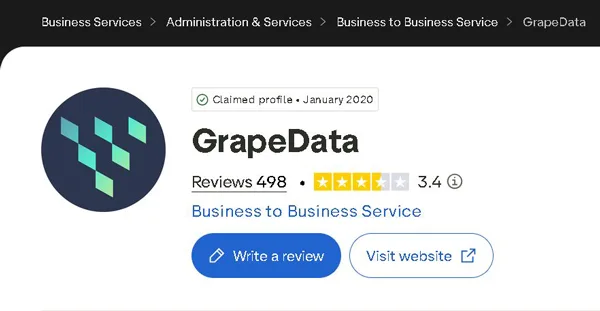
The ratings show the same split. Trustpilot has 498 reviews, with an average of 3.4 out of 5. The App Store has 111 ratings, with an average of 3.5. The averages are almost equal, but the first comes from 498 people and the second from 111, so I pay more attention to the 3.4. I also estimated the tone of the Trustpilot reviews and came to about half positive, around 20% neutral and around 30% negative, so roughly 250 happy people and roughly 150 upset ones, on the same site and under the same rules.
I didn’t find a point after which opinions turned. The split comes from how the site is built, with strict verification at its core. I think the story in the bad reviews will keep repeating.
Red flags you should never ignore
It bothers me to finish a task and get less than it’s worth. GrapeData’s terms allow this (section 7.2) if you don’t send the proof they ask for, if the data is invalid, or if the response doesn’t meet their “standards.” I understand the first two reasons. But the standards are their own.
Section 4 scares me more. It says they can flag and close your account for having multiple accounts, for a PayPal account that’s unverified or used by multiple people, for VOIP, VPN, or TOR, for a number considered fraudulent (“Fraudulent Number”), and for what they call high-risk activities. Anyone with a network set up differently from most can suddenly lose their account.
Under section 8, you give them an unlimited, irrevocable, perpetual, worldwide license to everything you submit, and you waive all moral rights. Under section 17, you agree to binding arbitration in London for any dispute, under the rules of the European Court of Arbitration, and you waive class actions in court.
The terms favor them heavily when it comes to money and your account. But these are verified risks, written into the contract, not scam accusations with no proof, and GrapeData is a legally registered company. I’ll access the site without a VPN and send the proof they ask for with every task.
Can anyone join GrapeData?
I expected signing up for GrapeData to be done once I got to the password. The first steps are simple:
- I clicked “Start Earning”, the button in the top right corner of the official site.
- I entered a valid email address on the page that opened.
- I got a 6-digit code, copied it, and entered it in the field on the site (without it, I couldn’t get to the next step).
- I filled in my first name, last name, and the password I’ll use when I log in.
But after the password there were more questions, this time about work. GrapeData wants to know your employment status, your role in the company, how big the company is, and what its annual revenue is. I’m surprised a survey site asks about a company’s annual revenue. The last choice is the type of surveys, with only 2 options: consumer surveys (B2C) and professional surveys (B2B). After that, the account is ready and you can log in.
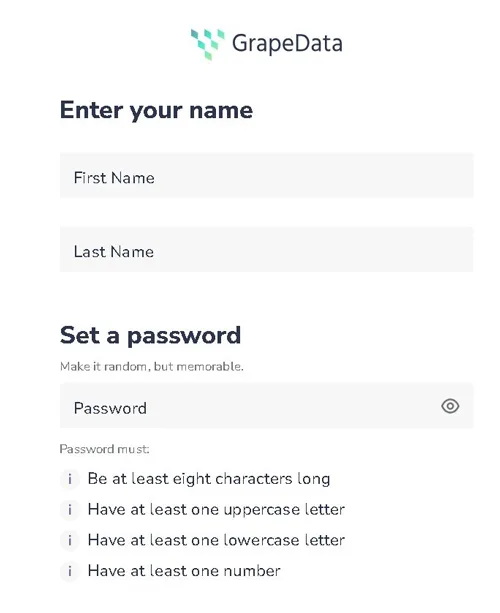
The questions about the company do serve a purpose, though. GrapeData is mainly looking for B2B decision-makers, consultants, corporate managers, people who work in the medical field, and people in less common niches.
Anyone who is at least 18 can create an account. Under that age, you’re not legally allowed to either sign up or use their services. Someone who’s in college or has an entry-level part-time job can join too, but they’re not in the groups GrapeData mainly targets. Does it show? I’m afraid so, in how many surveys they’ll get.
I don’t think your country will cause you any trouble. GrapeData says on its homepage that it has members from over 90 to 100 countries (a fairly wide range for an official figure), and with that many countries, there’s a good chance yours is on the list. Your profile matters more than your country.
Can you use it on your phone?
When we want to make some money from our phones, we usually go straight to the app store and look for the site’s app. With GrapeData, that still works. They have apps for iOS and Android, where you set up your profile and complete tasks. But only until October 31, 2026, when they shut them down permanently.
Is it still worth downloading now? I don’t think so. You’d be putting time into an app that they themselves are retiring, in an interface that’s already on its way out. And after October 31, you’d still have to go to the official site in your phone’s browser, whether that’s Safari, Chrome, or whatever browser you have.
What bothers me more, though, is VerifAI, their verification engine. VerifAI often disqualifies people who don’t have the exact corporate job profile it’s looking for, such as consultants or financial analysts. I’m afraid that at 18, you have little chance of matching a profile like that. And so, for someone who’s 18 and wants quick pocket money from their phone, GrapeData now brings more headaches than money.
If you still decide to go for it, skip the app store. Go to the site in your phone’s browser, create your account there, and turn on location on your phone. Without location, the system can automatically mistake you for a bot. It’s a shame to fail verification just because one setting was off.
At least you’ll have your account where the site still works, even after October 31.
Is GrapeData LEGIT or SCAM?
Those of us who make money from surveys are all looking for a site that pays well and always has something for us to fill out. GrapeData only gave me the first half.
And the first half really is good. The company is registered in the UK, it’s a site you can trust, and it pays as promised, with a convenient payment method. The surveys are for companies (B2B), which pay good money to find out what people in their field think.
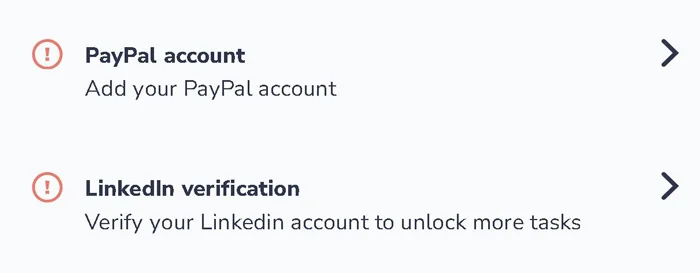
But before you see that money, you have to get past their checks. They check your LinkedIn profile and where you’re logging in from, because they care more about quality than quantity. I’m a little scared of their anti-fraud system, which is very aggressive. All it takes is tripping an automated flag by accident, and you can get disqualified out of the blue, get paid only part of the amount, or even have your account closed. And it happens often.
Given how well they pay, I expected more surveys. There aren’t many anywhere, and in some countries and some fields you’ll find very few. When you land one, you get a good amount. It’s just that a survey you land now and then doesn’t add up to extra money you can count on.
I think it’s a good site. Or, to be fair, a good site for certain people. It works for someone who already has an established career, logs in from a regular internet connection, and is fine with a strict identity check. Anyone who just wants to fill out surveys when they feel like it and know for sure they’ll get some money without much effort won’t find that here.
If you need surveys every day, take a look at the top 7 GPT apps. They all let you earn well and give you rewards consistently.
And if you’ve gotten through their checks, have a question, or want to say what you think of GrapeData, leave me a comment below. I’m curious whether they’ve sent you more surveys than me!