

If you need extra money and want to earn it from home, an online survey site is a good option. But they’re not all the same: some are much better than others. And how do you know which is which? The best way is to try them out, so I tried KnowledgePanel.
In this review, I’ll cover how it works, how many surveys you get, how much you can earn, and whether it’s worth the effort.
It’s not a scam. But if you sign up without knowing what you’re getting into, you can waste a lot of time, and I’m as careful with my time as I am with my money. Here’s everything I found out after signing up, so you can see whether it’s worth it before you sign up.
What is KnowledgePanel, and what to expect?
KnowledgePanel, launched in 1999, is an invitation-only online research platform. The people it selects fill out short online surveys and share their opinions on new products, current events, and the news. In exchange for their time, members get money, points, or gift cards.
How does the company choose its members? Researchers randomly pick physical addresses and phone numbers from all over the country. That gives them a group that mirrors the entire population. That’s called a probability-based panel. You can’t create an account yourself. If no one has invited you, there’s no getting in.
The platform, founded by two Stanford University professors, is run by Ipsos, a large market research company that operates worldwide. Ipsos also owns Ipsos i-Say, its standard survey site, which anyone can sign up for. You can join i-Say whenever you want, but with KnowledgePanel, you wait for them to invite you. The company is registered in Paris, France, and its American branch is based in New York. That’s pretty much all there is to the platform.
An invitation tells you nothing about how much your time is worth on the panel. I’ll cover that in the rest of the review, where I’ll tell you what to expect from the site.
Give opinion and earn money
On PineCone Research, KingOpinion or CrowdTap (I’ve written about them on the blog, and they’re just a few examples from a longer list), you often get kicked out of a survey halfway through because you don’t fit the exact profile they need. I expected the same from KnowledgePanel. But here the selection happens behind the scenes, before a survey is sent to you.
When you sign up, you fill out an initial household profile, and you only get regular surveys after that. Ipsos goes through that data and prequalifies you, so you’re very likely to qualify for whatever it sends you. You may still get a few short questions right when you open the link, to confirm you’re in the group they’re looking for, but getting disqualified late is rare. You won’t spend 20 minutes only to get banned or disqualified at the last second. Because it doesn’t waste your time, I consider it one of the best sites for making a little money.
There’s another reason I feel safer. Public survey routers send your data through a dozen random third-party networks. Here the studies are Ipsos’s own and it runs them directly, and there are no partner providers to choose from in your profile. I have no way of checking what happens to the data on their end, but I prefer it this way.
But when you have time, there’s nowhere to look for surveys, because there’s no page listing open ones. When a survey is picked specifically for you, you get an email or a text and open it through the link in the message. This happens rarely, anywhere from zero to less than once a day, and even one survey a week means you got lucky. If you want to do 10 a day with videos playing in the background, you’ll be disappointed, because the site can’t give you that.
The pay is just as modest. You get a one-time $20 for the initial profile. After that, each survey you finish pays 1,000 points, worth $1, and usually takes 10 to 15 minutes. That bonus equals 20 surveys, and at this pace that’s about 20 weeks of waiting. The money adds up slowly.
Is $1 worth 10 minutes? If you already have an active account, I’d say yes. It’s an easy dollar once a week, and all you have to do is keep an eye on your email. For almost no effort, you’ll have enough each month for a few coffees or a streaming subscription. It won’t change your budget, but I’d rather get a dollar, small as it is, than spend 20 minutes nobody pays me for.
How do you get paid?
I was worried I’d lose some money when I withdrew, because a lot of the popular public survey apps take a cut or charge a processing fee when you cash out. Here, the fee is $0. I didn’t find any hidden costs, processing fees, or penalties for redeeming points for cash or gift cards, and you get exactly the dollar amount you earned. The math is easy to do in your head, because 1,000 points is always $1. I stopped worrying about it. Withdrawing is safe and fair, and I didn’t find any catch.
But the money comes in slowly. A regular survey pays exactly 1,000 points, and you get about one a week. To get a check, you need 25,000 points ($25), which means 25 surveys and a few months of passive participation, and only then do they mail you a check. E-vouchers and the rest of the store have a general minimum of 20,000 points ($20). That’s 5 fewer surveys, so if a voucher is something you’d use, you’ll get paid around 5 weeks sooner.
The store is called the KnowledgePanel Rewards Marketplace, and there are 3 main options. The paper check comes by regular mail to your home address. The e-voucher is a digital gift card code you receive online (for example, an Amazon code). The third option is physical products or entries in the monthly cash prize drawings, and if you go the drawing route, you won’t know in advance whether you’ll win anything.
If you don’t live in the United States, none of this will help you. KnowledgePanel is designed strictly for randomly selected U.S. households and doesn’t accept sign-ups from other countries. And all payments are in U.S. dollars only, from the amounts to the checks and digital gift cards.
What happens to your points if you leave before you hit the threshold? When you unsubscribe, the official rules give you 30 calendar days to cash out your account. There’s also one exception. If the terms change across the whole system, and you happen to have fewer than 20,000 points at that time and decide to leave, you’ll get a check in the mail for whatever you’ve earned up to that point, no matter how small. It’s not something to count on, but I’m glad it’s in writing.
If the withdrawals here disappoint you, you’ll find a few sites on my blog that are easier to use, like Earnopolis, Prime Opinion, or GG2U. You don’t need an invitation code for those, and they give you a lot more ways to earn and cash out.
The wait didn’t bother me much. I’ve come to think of KnowledgePanel as money I’ve set aside, not money I can just spend on a Friday night going into the weekend. One short survey a week doesn’t take much of your time, you forget about it until the next one, and after a few months you end up with a gift card or a check for $20 or $25 that didn’t cost you anything. When you finally get it, that $25 is still $25.
How much does KnowledgePanel pay?
I tried to figure out your hourly rate on KnowledgePanel and ran into a problem: there’s nothing to fill an hour with. Surveys are the only way to earn money directly, and a regular survey, as I mentioned earlier, pays 1,000 points ($1) for 10 to 15 minutes of work. Depending on how fast you finish, that works out to $4 to $6 an hour. The catch is that it can take a whole month just to collect an hour’s worth of surveys.
If I log in once a week for four straight weeks and complete the four surveys that come by email, I spend 40 to 60 minutes in total, mostly just clicking through them, and my balance goes up by 4,000 points ($4). That’s a typical month for an active member: about four or five surveys and $4 to $5. It isn’t much, but it’s steady. Some months you get two surveys in a single week and might make $8 to $10, tops. Those months are rare.
You need 20,000 points ($20) for a digital card, and it takes a typical active member about four to five months of steady participation to get there. Only then can they request a withdrawal. That’s a long wait for such a small amount.
My first impression was better. The required profile survey, the one you complete when setting up your account, paid me a one-time $10 (you can take it in cash or in points of the same value), and I thought I could sit down on day one and earn $50. But you don’t get to choose when surveys show up. I waited for invitations by email, and my first earnings came from that $20 plus the single survey link that landed in my inbox within a week.
How does KnowledgePanel compare to a real part-time job? Not well, because you earn less than minimum wage answering questions. But a job asks a lot more of you. Here, I answer almost without thinking, and I don’t set aside time just for this. I’m also glad I don’t have to compete for attention, get disqualified on the spot, or spend hours on end hunting for available work, because the minutes I spend here actually get paid.
The earnings are very small, and the payouts are very reliable. The money builds up slowly, bit by bit, with you doing almost nothing, and a few times a year it turns into a small bonus, like a fast-food meal or a movie ticket, just for sharing your opinion. You’ll still need to find other money for your phone bill and groceries.
What users really say about KnowledgePanel?
I was afraid I’d find a lot of blocked accounts among the reviewers. I collected 119 reviews from three platforms, and very few of them mention bans. There’s a reason for that, too: the panel picks its participants by address, and when a household is inactive or doesn’t qualify, the panel stops sending it surveys. That put my mind at ease.
The complaints are mostly about time. People on SurveyPolice (22 reviews, 4 out of 5 stars) trust that they’ll get paid and are happy they can redeem their points for cash or gift cards, but they’re also the ones writing about the $25 minimum payout, the paper checks that take 3-6 weeks to arrive, and the serious shortage of surveys.
Is $25 a lot? It depends on how much time you put into earning it. On the Apple App Store (17 ratings, 4 stars), the complaints are similar to those on the other platforms: invitations are rare, and people give examples like $1 for a 30-minute survey. If every survey paid that, it would take me 25 surveys and 12 and a half hours of answering questions to reach the minimum, at $2 an hour, and only then would the wait for the check even begin. Seeing the hours next to the money is what really gets to me.
I thought the lack of surveys was a new problem. It isn’t. People have been writing about it for years, and I found no sign of any recent changes. The Google Play reviews (80, with 4.8 stars) say the app puts all the surveys in one place and the payments are real, but the pace slows down a lot after the start.
Including the forum mentions, I ended up with about 60% positive, 25% neutral, and 15% negative opinions. The positive ones come down to the panel’s trustworthiness, the guaranteed payments, and its ties to academia and government institutions (the CDC, for example). The neutral ones come from people who understand this is passive income, the kind that comes in bit by bit and takes patience. The negative ones are about the low hourly pay, the wait for checks, and a few rewards that never arrived.
Research institutions also think highly of it because of its probability-based sampling method. People who take the surveys see it as safe, trustworthy, and annoyingly slow.
The case that stuck with me is also from Google Play. One person waited months for a reward they’d already requested, and the issue was never resolved. The complaint seems credible, but I have no way to verify it. Support gets mixed reviews: they publish their phone hours, but people who emailed about missing rewards got a late reply or none at all. Now I’m worried about something else: earning a reward and never hearing back from anyone.
Red flags you should never ignore
Getting an envelope of cash in the mail sounds like a scam. That’s exactly what a lot of people say about KnowledgePanel. Honestly, it would have spooked me, too. But it’s just how the company recruits new members, and two independent sources confirm it: their FAQ and user discussions.
I specifically went looking for accusations like this, along with privacy violations and dark patterns (those interface tricks that nudge you toward what the site wants). I expected to find more:
- I saw no interface tricks. You can’t sign up without the invitation code that arrives in the mail, and that keeps bots out.
- No data leaks, no unauthorized sales of personal data, no fines. Their privacy policy says they won’t sell your data to research clients. It’s just a promise, but it’s reassuring.
- The privacy statement dates back to 2017 and doesn’t really spell out anything on automated decision-making or state-level rights (CPRA, for instance). It’s a minor documentation risk.
- The check payouts made me a little nervous. A few people on Google Play say they redeemed their points and still hadn’t gotten their check a few months later. It sounds plausible, and it’s a shame about all the time spent earning those points. But these are isolated cases, not a pattern across the 119 reviews.
If you redeem your points for a check, write down when you requested payment.
Who can use KnowledgePanel?
I expected a simple sign-up form with just an email field, like on most survey sites, where any teenager with an email address can set up a profile and start collecting points right away. At KnowledgePanel, an account starts with an envelope. Your household is randomly selected, and the invitation arrives as an official letter, a postcard, or a phone call. If you don’t get an invitation, you can’t sign up. Can you bypass the six-digit PIN printed on the letter, the postcard, or the acceptance form? No, and I’d regret any minute I spent trying.
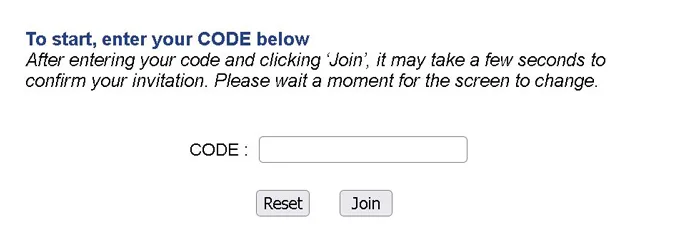
The invitations only go out in the United States. Ipsos also has separate branches in other countries, such as in Ireland, but knpanel.com only accepts people who live in the US. If you live anywhere else, that’s the end of it.
When I saw all the information they ask for during sign-up on their online portal, I figured they’d ask me to pay next. Full name, mailing address, email address, plus the names and ages of everyone in the household. That’s a lot for a survey site. They also verify your location and address with demographic checks against public records, to keep fake signups out. I was wrong. Signing up costs $0, and they’ll never ask you for money or try to sell you anything. In fact, if your household is selected and you don’t have internet at home, they’ll send you a laptop or tablet with free internet, and you can keep using it for as long as you stay active. To a cheapskate like me, that sounds great.
The money doesn’t come until after the profile survey. You only get the welcome bonus, which I already covered in the review, once. It’s 20,000 points, exactly $20, so 1,000 points equals $1. Just entering your code on the site doesn’t get you anything. Every member of the household has to complete registration and finish the introductory survey. Only then is the $20 guaranteed, and you get it right away. For a survey where you just tell them who you are, that seems like very easy money to me.
Anyone 18 or older in the selected household can create an account with the household code, no approval needed. Under 18, it gets more complicated. The minimum age is 13, and anyone between 13 and 17 needs explicit permission from a parent or guardian. The main adult who received the household’s invitation also has to approve the account. I like that rule, since we’re talking about kids.
If I were a teenager in a US household, I’d check every envelope my parents brought in and keep the one with Ipsos or KnowledgePanel on it, because it’s safe, it’s free, and it leads to the $20. But I’d still have to ask my parents, because without their consent, I wouldn’t get an account.
Can you use it on your phone?
If your phone is out of space, you don’t need to free up room for KnowledgePanel. Open the invitations straight from your email, and it all works exactly the same way.
There’s an official app too, and it’s safe and trustworthy. I thought it would have something the email links don’t, but there are no hidden features. It just opens your phone’s browser, and the data is collected there, just like when you open the regular links from your email. That’s about all it does.
The one thing it adds is an easier way to reach your points page, if your household has a verified registration code. For me, that’s the only reason to install it.
The shady versions floating around online worry me, and it’s not worth the risk for an app that only opens your browser. Only get it from the official stores, where it’s called Ipsos KnowledgePanel. On Android that’s Google Play, where the developer is listed as AppDev Ipsos, and on iPhone or iPod touch it’s the Apple App Store, if you’re running iOS 15.0 or later.
And if you’re on an older version of iOS, you’re not missing anything, because you still get the invitations by email.
How to opt out after you become a member?
Once you get tired of the weekly email notifications or simply don’t want surveys anymore, you probably just want to close your account right away. This will take a little patience, though, because there is no button on the main account page that deletes your entire history in one click, and your profile has no unsubscribe link. Canceling is a manual process, so it takes a bit of time.
You have two options: email [email protected] or call the support number listed on their official website. Calling makes sense if you’d rather talk to a person or want confirmation right away. I would just use the email option. You only need to send one sentence explicitly asking them to close your account.
My bigger concern was what happens to my data after I leave. As soon as you request cancellation, the company is legally required to stop using your data. They state that they make reasonable efforts to immediately stop using your personal and demographic data in their active systems. The phrase “reasonable efforts” feels a bit vague, especially since I have no way of knowing what actually happens in their systems.
However, not everything disappears the moment you send that email. They retain basic data for as long as legally required, covering regulatory obligations, unresolved disputes, and past agreements they must enforce. I wish it all vanished with the account, but at least I understand why they hold onto it.
Even with the manual process, the exit policy feels fair to me. It is no surprise they follow strict consumer privacy standards, especially with a massive company like Ipsos behind it. They don’t hide your data from you, and they stop the endless spam once you ask to leave.
Once you contact them, they handle the rest. You stop getting messages, there are no fees to pay, and there is nothing to stress about. That is really all there is to it.
If I ever get tired of surveys, I’ll just send one sentence to their email address and let them do the rest.
Is KnowledgePanel worth it?
I was hoping a site from a company this big would offer a simpler way to get paid. KnowledgePanel is owned by Ipsos, the global market research company also behind Ipsos i-Say (you’ll often see it referred to as Ipsos KnowledgePanel). But you get paid by paper check, sent through the mail, and it can take several weeks to arrive. This old-fashioned system annoys me. It’s where the site is weakest.
On top of that, you have to complete a lot of surveys before you see a check. The only way to earn points is to finish online surveys. Each survey pays $1, and the minimum payout is $25. Do the math, and that’s 25 surveys for a single check. And they come along very rarely. If you break your earnings down by the hour, the pay often falls below the usual market rate.
Still, I’m not worried about getting paid. Payments are guaranteed. The panel is probability-based and very trustworthy, one of the safest options in market research. I find that reassuring.
You can only join with an invitation code sent by mail, and only if you live in the US. If you’ve found a code in your mailbox, I think it’s worth using. It works as a background source of extra money that pays out a little now and then, without much effort. It’s no good for anyone who wants to spend their time on surveys, collecting small amounts one after another. There just aren’t enough surveys for that.
If you’ve used KnowledgePanel, have a question, or have something to add, I’ll see you in the comments!